
Table of Contents
Introduction: The Power of Outdoor Lighting
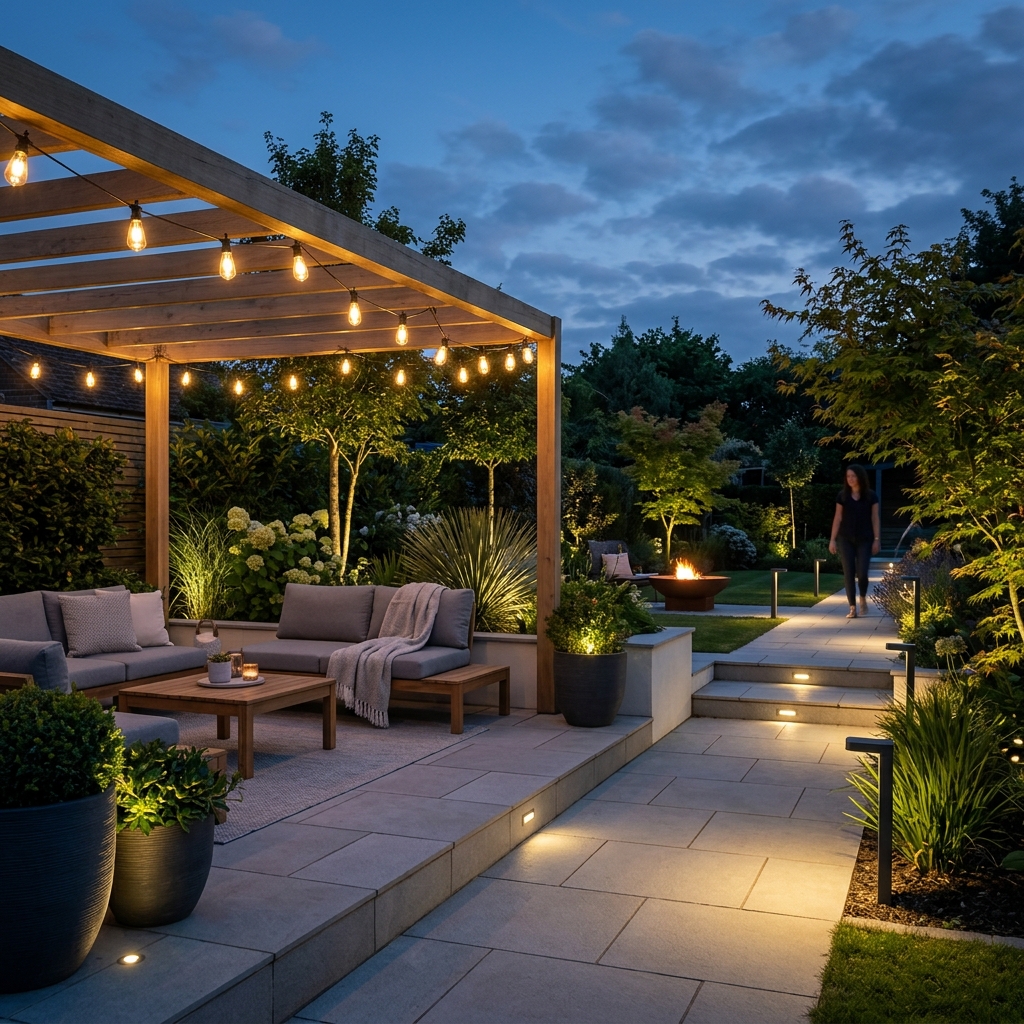
Outdoor lighting has evolved beyond mere security. In 2026, it’s a vital element of garden design, extending your usable living space, enhancing aesthetic appeal, and even increasing property value. Trends are leaning heavily towards integrated smart systems, biophilic design (bringing the outdoors in through lighting mimicking natural patterns), and sustainable, energy-efficient solutions. A well-lit garden can become an extension of your home, perfect for evening entertaining, relaxing, or simply enjoying the beauty of your outdoor space, even after dark. This article will guide you through planning, choosing, and installing the perfect outdoor lighting for your UK garden.
Planning Your Garden Lighting Scheme
Before rushing to purchase lights, careful planning is crucial. Start by assessing your garden’s layout. Identify key features you want to highlight – a beautiful tree, a water feature, a striking sculpture, or a welcoming pathway. Consider your lighting needs: do you prioritize security, ambience, or practicality? Think about how you use your garden.
Zoning your garden is a helpful approach. Create distinct areas for different purposes: a brightly lit pathway for safety, a softly lit dining area for entertaining, and perhaps a more dramatic spotlighting scheme for architectural plants. Consider the shadows cast by existing structures and trees, and how lighting can interact with them. Sketching a plan can be immensely beneficial.
Types of Outdoor Lighting: A Comprehensive Guide
The market offers a wide array of outdoor lighting options. Here’s a breakdown of the most popular choices, with their pros and cons:
Path Lights
Ideal for illuminating walkways and driveways, enhancing safety and guiding guests.
| Feature | Pros | Cons |
|---|---|---|
| Cost | Relatively inexpensive (e.g., B&Q Solar Powered Path Lights (6 pack) – £35.00) | Solar-powered options may have limited brightness. |
| Installation | Generally easy to install (often stake-into-ground) | May require wiring for mains-powered versions. |
| Energy Efficiency | Solar powered options are very efficient. LED path lights are also good. | Traditional halogen path lights are less efficient. |
Spotlights
Perfect for highlighting specific features like trees, statues, or architectural details.
| Feature | Pros | Cons |
|---|---|---|
| Brightness | High brightness for dramatic effect. (e.g., John Lewis & Partners LED Floodlight – £60.00) | Can cause glare if not positioned correctly. |
| Versatility | Adjustable angles for precise targeting. | Can be visually intrusive if not well-integrated. |
| Power Source | Mains powered for consistent brightness. | Requires professional installation for wiring. |
Wall Lights
Add ambience and security when placed near entrances or along walls. (e.g., Dusk Wall Mounted Outdoor Lantern – £75.00)
Deck Lighting
Enhances patios and decks, creating a warm and inviting atmosphere.
String Lights/Festoon Lights
Create a relaxed and festive atmosphere, ideal for entertaining. (e.g., Lights4fun Festoon Lights (10m) – £45.00)
Underwater Lights
Add a magical touch to ponds and water features.
Smart Lighting
Offers remote control, scheduling, and colour changing capabilities. (e.g., Philips Hue Outdoor Lighting Starter Kit – £249.99)
Illuminating Garden Features: Creative Ideas
Here are some ideas to spark your creativity:
- Trees: Uplighting from below creates a dramatic silhouette.
- Shrubs: Downlighting highlights texture and form.
- Statues: Spotlighting adds a focal point and emphasizes details.
- Water Features: Underwater lights create a captivating display.
- Walls: Wall lights provide both ambience and security. Grazing lights (shining light along a textured surface) can emphasize stone or brickwork.
- Pathways: Path lights guide the way and enhance safety.
Outdoor Lighting Styles for UK Gardens in 2026
The style of your outdoor lighting should complement your garden’s overall design:
- Modern Minimalist: Clean lines, geometric shapes, and subtle lighting.
- Rustic Charm: Warm-toned lights, natural materials, and a relaxed atmosphere.
- Cottagecore: Fairy lights, lanterns, and a whimsical feel.
- Coastal: Nautical-inspired lights, cool tones, and a breezy aesthetic.
- Contemporary: A blend of modern and traditional elements, with a focus on functionality and style.
In 2026, biophilic design is a major influence. This means incorporating lighting that mimics natural patterns, such as the dappled light filtering through trees, or the gentle glow of moonlight. Expect to see more ‘warm dimming’ LEDs that mimic the colour temperature changes of the sun, and lights designed to attract pollinators.
Smart Garden Lighting: Automation & Control
Smart lighting systems offer unparalleled control and convenience. With remote access via smartphone apps, you can adjust brightness, change colours, and set schedules. Integration with other smart home devices (like Amazon Alexa or Google Home) allows for voice control. (e.g., Roberts Home Smart Outdoor Plug – £29.99 allows turning standard lights on/off remotely)
Popular UK brands include Philips Hue, Hive, and Lightwave.
Energy Efficient Outdoor Lighting Options
LED lighting is the standard for energy efficiency. It uses significantly less energy than traditional halogen or incandescent bulbs, and it lasts much longer. Solar-powered lights are an even more sustainable option, but their performance can be affected by weather conditions. Low-voltage systems are also a good choice, as they require less electricity and are safer to install. The UK continues to enforce strict energy efficiency regulations, so ensure any lighting you purchase meets current standards. Look for the Energy Saving Trust Recommended logo.
Outdoor Lighting Safety & Installation
Safety is paramount. Always use weatherproof lights with appropriate IP ratings (Ingress Protection). IP44 is generally sufficient for protected locations, while IP65 or higher is recommended for exposed areas. Electrical safety is crucial – if you’re not comfortable working with electricity, hire a qualified electrician. Never overload circuits. Consider using RCD (Residual Current Device) protection.
UK Garden Lighting Regulations & Considerations
Generally, you don’t need planning permission for most basic garden lighting. However, if your lighting is particularly bright or could cause a nuisance to neighbours (e.g., light pollution), you may need to consider it. Be mindful of light trespass – avoid shining lights directly into neighbouring properties. Check with your local council if you’re unsure.
Where to Buy Outdoor Lighting in the UK (2026)
Here are some popular retailers:
- B&Q
- Screwfix (e.g., Screwfix LED Security Light – £39.99)
- John Lewis & Partners
- Lights4fun
- The Range (e.g., The Range Garden Spotlights (4 pack) – £20.00)
- Dusk Lighting
- Amazon UK
FAQ
What IP rating do I need for outdoor lights?
Generally, IP44 is suitable for sheltered locations, like under eaves. IP65 or higher is recommended for exposed areas, as it offers better protection against dust and water.
Are solar lights bright enough?
Solar lights have improved significantly in recent years. While they may not be as bright as mains-powered lights, they’re suitable for path lighting and ambient illumination. Choose models with high lumen output and a large solar panel.
Can I install outdoor lighting myself?
Simple installations, such as stake-into-ground path lights, can be done yourself. However, any work involving mains electricity should be carried out by a qualified electrician.
What is ‘warm dimming’ in LED lighting?
Warm dimming LEDs mimic the behaviour of traditional incandescent bulbs. As you dim the light, the colour temperature shifts to a warmer, more amber tone, creating a more relaxing and natural atmosphere.
How can I reduce light pollution in my garden?
Use shielded lights that direct light downwards, avoid shining lights into neighbouring properties, and consider using motion sensors or timers to reduce unnecessary illumination.