
Table of Contents
As an Amazon Associate, we earn from qualifying purchases. This means we may receive a small commission at no extra cost to you when you buy through links on this page.
What is Composting and Why Do It?
Composting is nature’s recycling process, and a hugely beneficial practice for any UK gardener. Essentially, it’s the controlled decomposition of organic matter, turning your kitchen and garden waste into a nutrient-rich soil amendment called compost – often referred to as ‘black gold’ by enthusiasts. But the benefits extend far beyond just improving your flower beds. Composting significantly reduces the amount of waste you send to landfill, lessening your environmental impact. In 2026, with increasing landfill taxes and a growing awareness of sustainable practices, composting is more important than ever. Plus, it’s a cost-effective way to nourish your garden, reducing your reliance on commercially produced fertilisers which can be expensive – a bag of quality garden compost currently costs around £8-£12 depending on size and brand.
Choosing the Right Compost Heap Location
Selecting the right location is crucial for successful composting. Consider these factors:
- Sunlight: A partially shaded spot is ideal. Too much direct sun can dry out the heap, while too much shade can slow decomposition.
- Drainage: Ensure the location isn’t prone to waterlogging. Good drainage prevents anaerobic conditions (lack of oxygen) which lead to unpleasant smells.
- Accessibility: You’ll be visiting your compost heap regularly, so choose a location easily accessible from both your house and garden.
- Water Source: Having a water source nearby makes it easier to maintain the correct moisture levels.
- Neighbours: Be mindful of your neighbours. A well-managed compost heap shouldn’t cause any odour issues, but it’s polite to position it away from their property line and keep it tidy.
Types of Compost Bins & Systems
There are several ways to compost, each with its advantages and disadvantages. Here’s a comparison:
| Composting System | Pros | Cons | Approximate Cost (2026) |
|---|---|---|---|
| Open Heap | Simplest and cheapest method, ideal for large amounts of garden waste. | Slowest decomposition rate, less aesthetically pleasing, can attract pests, requires more space. | £0 – £20 (for basic fencing) |
| Enclosed Plastic Bin | Retains heat and moisture, speeds up decomposition, keeps pests at bay, tidier appearance. | Can be bulky, plastic isn’t the most eco-friendly material. | £40 – £100 |
| Wooden Compost Bin | More aesthetically pleasing than plastic, good ventilation. | Can rot over time, requires more maintenance, may attract pests if not properly constructed. | £89.99 (for a 1m³ bin) |
| Tumbler Composter | Fastest decomposition rate due to easy turning, excellent aeration, pest-proof. | More expensive, smaller capacity than other methods. | £129.99 (Lifesaver Compost Tumbler) |
| Worm Composting (Vermicomposting) | Excellent for kitchen waste, produces high-quality compost (worm castings), ideal for small spaces. | Requires more initial setup, needs regular worm care, not suitable for large amounts of garden waste. | £60 – £150 |
The Hotbin Composter (£189.99) is a popular choice for those wanting a speedy and efficient composting process, using clever insulation to maintain high temperatures.
What to Compost: The ‘Greens’ and ‘Browns’ Rule
Successful composting relies on achieving the right balance of ‘greens’ (nitrogen-rich) and ‘browns’ (carbon-rich) materials. Think of it as a recipe – too much of one ingredient and it won’t work properly. A good rule of thumb is a 2:1 ratio of browns to greens.
‘Greens’ (Nitrogen-Rich)
- Grass clippings
- Fruit and vegetable scraps
- Coffee grounds and tea bags (remove staples!)
- Fresh manure (from herbivores – horses, cows, chickens)
- Plant trimmings
‘Browns’ (Carbon-Rich)
- Dried leaves
- Shredded cardboard and paper (avoid glossy or coloured paper)
- Wood chips and sawdust (untreated)
- Straw
- Small twigs and branches
What *Not* to Compost
- Meat, fish, and dairy products (attract pests and cause odour)
- Oils and fats (slow decomposition and attract pests)
- Diseased plants (can spread disease)
- Weeds with seeds (seeds may survive composting)
- Pet waste (potential pathogens)
- Coal or charcoal ash (can contain harmful substances)
Building Your Compost Heap: Step-by-Step Guide
- Start with a base layer of browns: This provides aeration. A layer of twigs or wood chips works well.
- Alternate layers of greens and browns: Aim for roughly a 2:1 ratio. Wet the layers as you go – the compost should be as damp as a wrung-out sponge.
- For open heaps: Build the pile at least 1m x 1m x 1m to retain heat.
- For bins: Fill the bin gradually, layering as described above.
- Add a compost activator (optional): These contain microorganisms that speed up decomposition.
Maintaining Your Compost Heap: Turning, Watering & Aeration
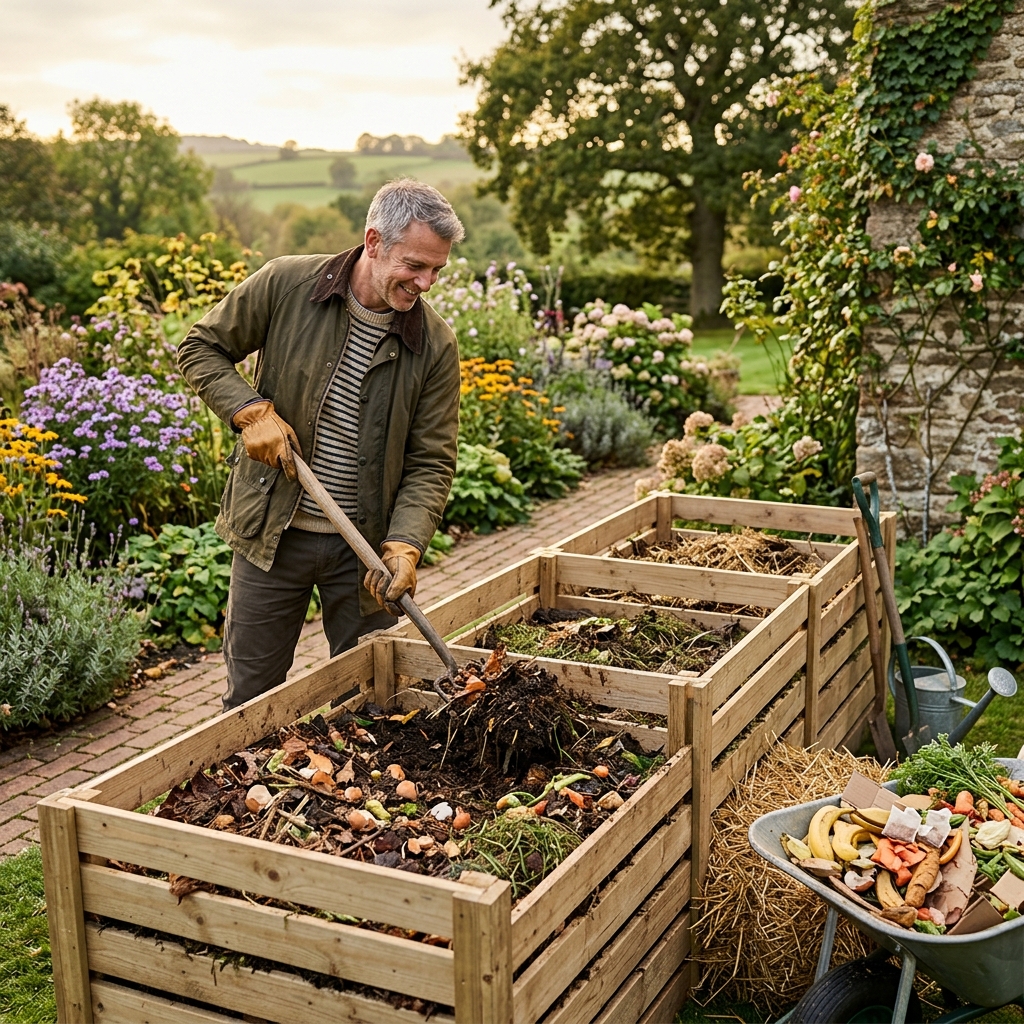
Regular maintenance is key to a healthy compost heap. Turning the heap introduces oxygen, which is essential for the microorganisms that break down the organic matter. Aim to turn the heap every 1-2 weeks using a Garden Fork (£39.99). If you’re using a tumbler, simply rotate it regularly.
Moisture levels are also important. If the heap is too dry, decomposition will slow down. If it’s too wet, it will become anaerobic and smelly. Add water as needed to maintain a damp, but not soggy, consistency.
Monitoring the temperature with a Compost Thermometer (£14.99) can indicate how well the decomposition process is progressing. A hot compost heap (55-65°C) indicates active decomposition.
Troubleshooting Common Compost Problems
- Compost is too wet: Add more browns and turn the heap to introduce aeration.
- Compost is too dry: Add water and turn the heap.
- Compost smells bad: This indicates anaerobic conditions. Turn the heap frequently to introduce oxygen. Avoid adding meat, dairy, or oily foods.
- Compost isn’t heating up: Ensure you have a good balance of greens and browns, and that the heap is moist enough. Add a compost activator.
- Attracting pests: Avoid composting meat, dairy, and oily foods. Ensure the heap is properly covered.
Harvesting and Using Your Compost
Your compost is ready to harvest when it’s dark, crumbly, and smells earthy. This can take anywhere from a few months to a year, depending on the method and maintenance. Sift the compost to remove any larger, undecomposed materials.
Ways to use your compost:
- Soil amendment: Dig compost into your garden beds to improve soil structure and fertility.
- Potting mix: Mix compost with equal parts of garden soil and sharp sand to create a nutrient-rich potting mix.
- Mulch: Apply a layer of compost around plants to suppress weeds, retain moisture, and enrich the soil.
- Lawn dressing: Spread a thin layer of compost over your lawn to improve its health and appearance.
Composting in Winter: Tips for Cold Weather
Composting doesn’t stop in winter, but it slows down. Here are some tips for maintaining a healthy composting process during cold weather:
- Insulate the heap: Wrap the bin or heap with bubble wrap or straw bales to retain heat.
- Continue adding materials: Don’t let the heap freeze solid. Keep adding greens and browns as they become available.
- Turn the heap less frequently: Microorganisms are less active in cold weather, so turning less often is fine.
- Shred materials: Smaller pieces decompose faster, even in cold temperatures.
Our Top Pick
For the best balance of speed, efficiency, and ease of use, we recommend the Hotbin Composter (£189.99). Although it represents a higher initial investment, the accelerated decomposition and pest-proof design make it a worthwhile choice for serious gardeners looking to maximise their composting efforts in 2026.
FAQ
Q: How long does it take to make compost?
This varies depending on the method and maintenance. A hot compost heap can be ready in a few months, while a cold heap may take a year or more.
Q: What is the ideal compost ratio of greens to browns?
A 2:1 ratio of browns to greens is a good starting point, but it doesn’t need to be exact. Adjust based on the moisture level and decomposition rate.
Q: Can I compost cooked food waste?
While technically possible in some systems, it’s best to avoid it as it can attract pests and cause odour. Stick to fruit and vegetable scraps.
Q: My compost heap smells bad. What am I doing wrong?
This usually indicates anaerobic conditions. Turn the heap frequently to introduce oxygen and avoid adding meat, dairy, or oily foods.
Q: Is it okay to compost cardboard?
Yes, but remove any tape or plastic stickers first and shred it into smaller pieces to speed up decomposition.