Table of Contents
As an Amazon Associate, we earn from qualifying purchases. This means we may receive a small commission at no extra cost to you when you buy through links on this page.
Why Attract Bees to Your Garden?
Bees are the unsung heroes of our gardens and the wider ecosystem. They are vital pollinators, responsible for the reproduction of around one-third of the food we eat, as well as the vast majority of flowering plants. A garden buzzing with bees isn’t just a beautiful sight; it’s a healthy, productive garden. Bees transfer pollen from flower to flower, enabling fruits, vegetables, and seeds to develop. Without them, yields would plummet and our landscapes would be far less diverse.
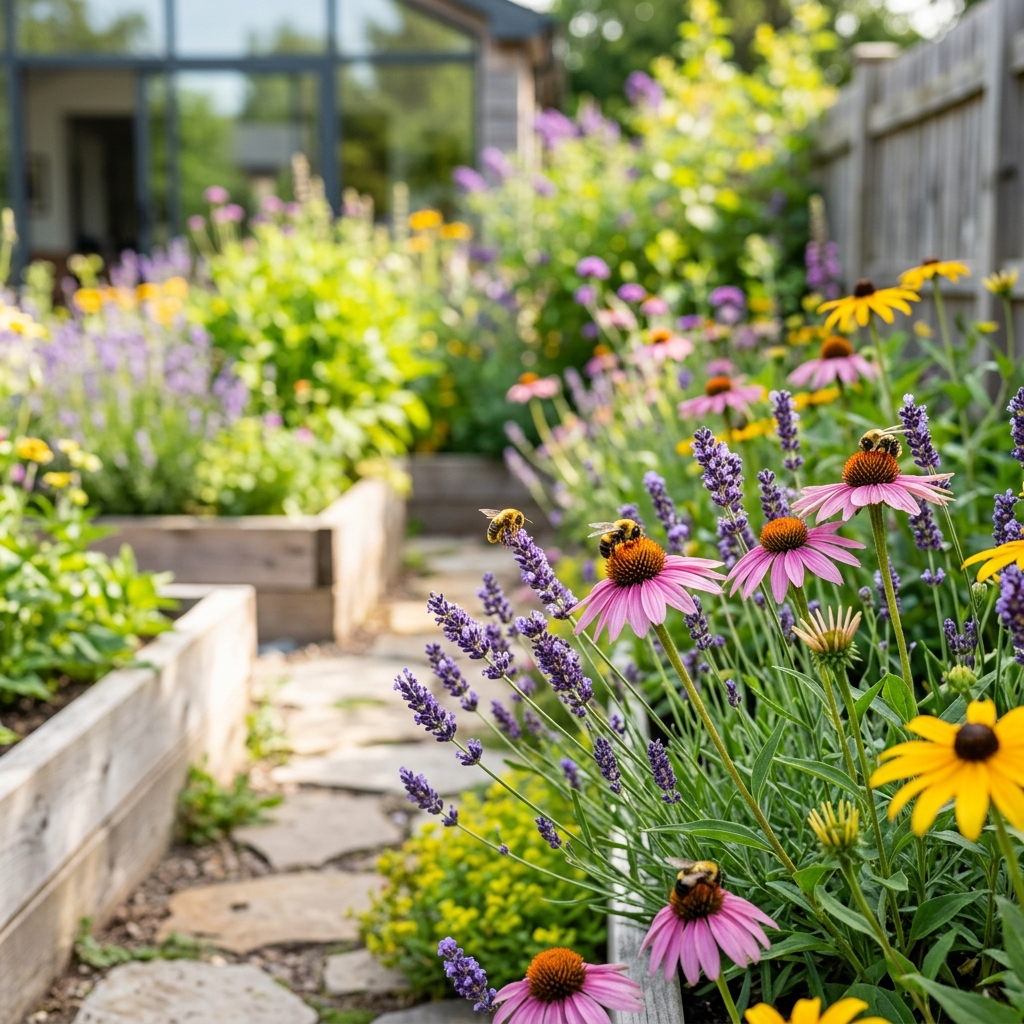
Sadly, UK bee populations have been in decline for years, facing threats from habitat loss, pesticide use, climate change, and diseases. By creating a bee-friendly garden, you’re directly contributing to their conservation and helping to ensure a sustainable future for these essential creatures.
Understanding Bee Preferences: What Bees Look For
Bees aren’t all the same! Understanding their needs is key to attracting them to your garden. They require three main things: nectar (for energy), pollen (for protein), and water. They also need safe, suitable nesting sites.
Types of Bees in UK Gardens
- Honeybees: Social bees living in hives, often kept by beekeepers. They forage over long distances.
- Bumblebees: Also social, but with smaller colonies. They’re particularly good at pollinating tomatoes and other plants with complex flowers.
- Solitary Bees: The vast majority of UK bee species are solitary. They don’t live in colonies and each female builds her own nest. They are often very efficient pollinators.
Seasonal Needs
Bees’ needs change throughout the year. Early spring sees emerging queens and the need for pollen to build up colonies. Summer is peak foraging time. Autumn is crucial for bees to build up their reserves for winter. Providing a succession of flowering plants throughout the seasons is essential.
Bee-Friendly Plants: The Best Blooms for UK Gardens
Choosing the right plants is the most effective way to attract bees. Prioritise flowers rich in nectar and pollen, and those with open, accessible structures. Here’s a breakdown by flowering season:
Spring
- Crocus: An early source of pollen.
- Hyacinth: Fragrant and attractive.
- Bluebells (native): A vital early nectar source.
- Fruit Trees (Apple, Cherry, Plum): Provide abundant pollen and nectar during blossom.
Summer
- Lavender: Highly attractive to bees and drought-tolerant.
- Borage: A prolific nectar producer.
- Foxglove: Provides long tubular flowers perfect for long-tongued bees.
- Sunflowers: A favourite, providing both nectar and pollen.
- Wild Marjoram: A classic wildflower.
Autumn
- Sedum (Stonecrop): Late-flowering and a vital autumn nectar source.
- Michaelmas Daisies: Provide a late boost of nectar.
- Ivy: Offers late-season nectar and pollen.
Comparison of Popular Bee-Friendly Plants
| Plant Name | Flowering Season | Sun Exposure | Price (approx.) |
|---|---|---|---|
| Lavender | Summer | Full Sun | £6.99 – £15 (per plant) |
| Borage | Summer | Full Sun/Partial Shade | £3.50 (packet of seeds) |
| Sedum | Autumn | Full Sun | £8.00 – £12 (per plant) |
| Sunflower | Summer | Full Sun | £2.50 (packet of seeds) |
Creating a Bee Habitat: Beyond Flowers
Flowers are a great start, but providing nesting sites and water sources will make your garden even more attractive to bees.
Nesting Sites
- Bee Hotels: Ideal for solitary bees. They provide pre-made tunnels for bees to lay their eggs. (Bee Hotel – Solitary Bee House: £29.99)
- Undisturbed Soil: Ground-nesting bees require patches of bare, undisturbed soil. Avoid mulching everywhere and leave some areas wild.
- Long Grass: Provides shelter and nesting opportunities for bumblebees.
DIY Bee Hotel Instructions
You can easily build a bee hotel using a block of wood, drilling holes of varying diameters (3-10mm) into it. Fill some holes with short lengths of bamboo cane. Mount it in a sunny, sheltered spot.
Garden Practices to Support Bees
How you manage your garden is just as important as what you plant.
- Pesticide-Free Gardening: Pesticides are harmful to bees. Opt for organic pest control methods. (Organic Pest Control – Bug & Mildew Spray: £18.75)
- Avoid Double Flowers: Double flowers often have reduced nectar and pollen, and the complex structure can make it difficult for bees to access what’s there.
- Leave Patches of Long Grass: Provides nesting and shelter.
- Responsible Sourcing: Choose plants from nurseries that avoid using neonicotinoids.
Water Sources for Bees: Keeping Them Hydrated
Bees need water, especially during hot weather. However, they can drown easily in open water.
- Shallow Dishes with Pebbles: Place pebbles or marbles in a shallow dish of water to provide landing spots for bees.
- Bee Waterers: Specifically designed bee waterers are available. (Bee Water Dish with Pebbles: £15.0)
- Clean Water: Regularly refresh the water to prevent algae growth.
Dealing with Bee Stings & Safety
While bee stings can be painful, most bees are not aggressive unless provoked. They only sting as a last resort to defend themselves or their hive.
- Prevention: Avoid swatting at bees. Wear light-coloured clothing. Avoid strong perfumes.
- Treatment: If stung, remove the sting quickly (scrape it out with a fingernail or credit card – don’t squeeze). Wash the area with soap and water. Apply a cold compress. Antihistamines can help reduce swelling and itching.
- Serious Reactions: If you experience difficulty breathing, swelling of the face or throat, or dizziness, seek immediate medical attention.
Resources & Further Information
- Bumblebee Conservation Trust: https://www.bumblebeeconservation.org/
- Royal Horticultural Society: https://www.rhs.org.uk/
- The Wildlife Trusts: https://www.wildlifetrusts.org/
- Native Hedging Plants: (Native Hedging Plants – Hawthorn & Blackthorn: £45.0)
Creating a bee-friendly garden is a rewarding experience, benefitting not only these vital pollinators but also enhancing the beauty and biodiversity of your outdoor space. With a little planning and effort, you can transform your garden into a buzzing haven for bees in 2026 and beyond.
Wildflower Seed Mix Options
| Seed Mix Name | Bee Attractiveness | Coverage (approx.) | Price (approx.) |
|---|---|---|---|
| Bee & Butterfly Friendly | Excellent | 5 sq. m | £12.5 |
| Cornfield Wildflowers | Good | 10 sq. m | £15.00 |