Table of Contents
Introduction: Why You Need a Garden Shed
The humble garden shed has come a long way. No longer just a place to store the lawnmower, it’s a multi-functional space increasingly vital to the modern UK garden. From essential storage for gardening tools and furniture, to dedicated workspaces, hobby rooms, and even home offices, a shed adds value and versatility to your outdoor space. UK garden trends in 2026 continue to favour ‘outdoor living’, with more people utilising their gardens as extensions of their homes, driving demand for robust and well-equipped shed space. A well-maintained shed can even increase your property value, offering a desirable feature for potential buyers.
Types of Garden Sheds: Which is Right for You?
Choosing the right shed type is crucial. Here’s a breakdown of the most popular options:
Apex Roof Sheds
Characterised by their peaked roof, apex sheds offer good headroom and efficient water runoff. They’re a classic choice, versatile for storage or light work.
- Pros: Affordable, easy to assemble, good headroom, classic aesthetic.
- Cons: Can look less modern, may not be ideal for very tall items.
Pent Roof Sheds
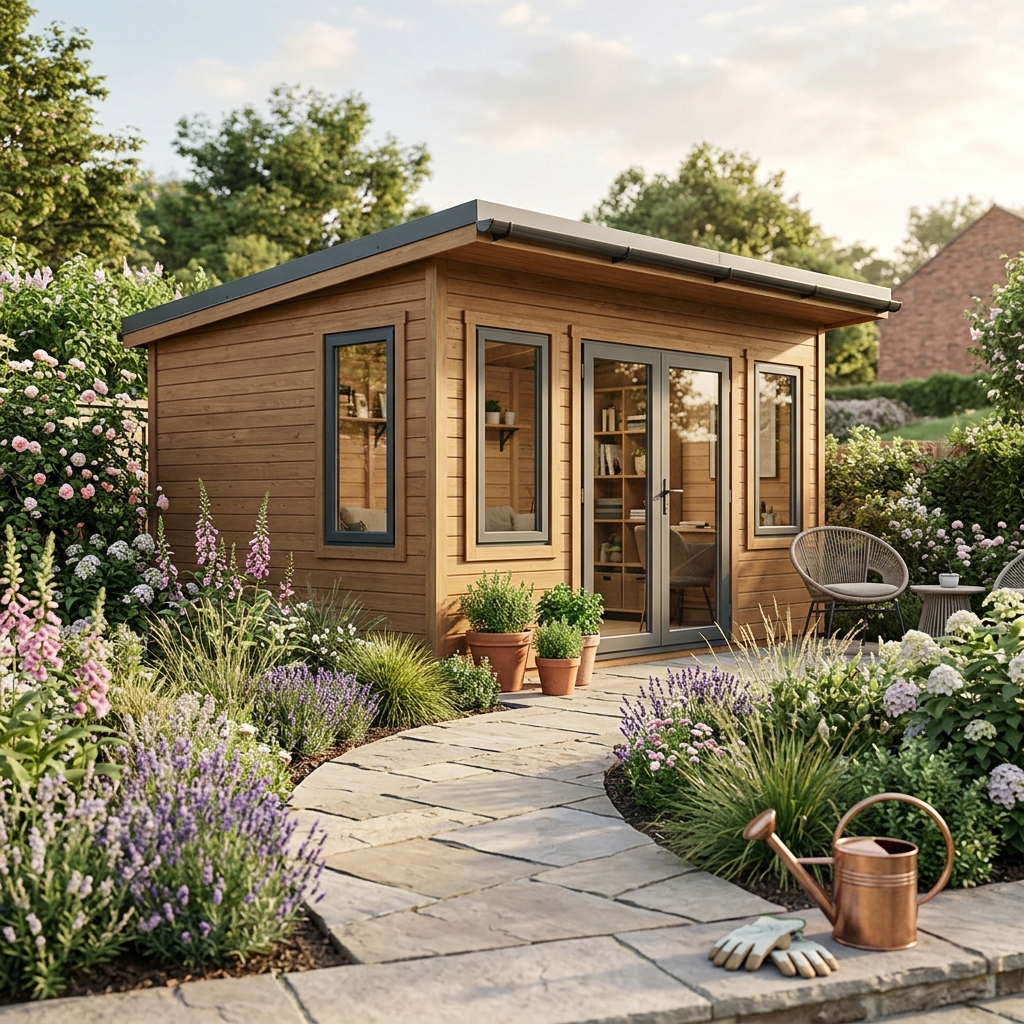
Pent roof sheds have a single sloping roof – a more contemporary look. They are generally easier to slot into tighter spaces.
- Pros: Modern appearance, good for utilising awkward spaces, often cheaper than apex sheds.
- Cons: Less headroom than apex sheds, water runoff can be less efficient if not properly sloped.
Reverse Apex Sheds
Similar to apex sheds, but with the higher side of the roof reversed, often used to match the roofline of a house.
- Pros: Aesthetically pleasing, good headroom.
- Cons: Can be more expensive than standard apex sheds.
Corner Sheds
Designed to fit neatly into corners, maximising space utilisation in smaller gardens.
- Pros: Space-saving, ideal for small gardens.
- Cons: Limited access points, potentially awkward internal layout.
Bike Sheds
Specifically designed for bicycle storage, often with dedicated racks and secure locking mechanisms.
- Pros: Secure bike storage, protects bikes from the weather.
- Cons: Limited storage for other items.
Log Cabins (as Sheds)
Robust and versatile, log cabins can be used as premium sheds or even small home offices. Expect higher costs but superior build quality.
- Pros: Extremely durable, attractive appearance, can be insulated for year-round use.
- Cons: Expensive, requires a solid foundation, may require planning permission.
Security Sheds
Built with reinforced materials and heavy-duty locking systems for maximum security.
- Pros: Highly secure, deters theft.
- Cons: Can be expensive, may not be necessary for all locations.
Shed Sizes: How to Choose the Right Dimensions
Accurate measurement is key. Consider what you plan to store and allow for access and movement within the shed. Common sizes include:
- 6x4ft: Ideal for basic storage – a few tools, gardening equipment.
- 8x6ft: A good all-rounder, suitable for larger garden tools, furniture, and some workshop space.
- 10x8ft: Offers ample storage and space for a workshop or hobby room.
- 12x10ft: Excellent for substantial storage or a dedicated workspace.
There are online shed size calculators available (search “garden shed size calculator UK” on your preferred search engine) to help you estimate the space you need.
Shed Materials: Wood vs. Metal vs. Plastic
The material impacts durability, cost, and maintenance:
| Material | Durability | Cost (2026 Estimate) | Maintenance | Security |
|---|---|---|---|---|
| Pressure-Treated Wood (Shiplap/T&G) | High (with regular treatment) | £400 – £1500+ | Regular staining/treating (every 1-2 years) | Good (can be reinforced) |
| Galvanised Steel | Very High (rust-resistant) | £500 – £1200+ | Minimal (occasional cleaning) | High (difficult to break into) |
| Plastic (Resin) | Moderate (UV resistant plastics are now common) | £600 – £1000+ | Very Low (wash down with soap and water) | Moderate (can be vulnerable to forced entry) |
By 2026, we’re seeing advancements in recycled plastic materials offering increased strength and UV resistance, making them a more viable long-term option. Wood treatment technologies are also improving, offering longer-lasting protection against rot and insects.
Planning Permission & Regulations (UK – 2026 Update)
Generally, under Permitted Development rights, you *don’t* need planning permission for a shed if:
- It’s located within the boundary of your property.
- It’s for personal use.
- The cumulative area of sheds and other outbuildings covers no more than 50% of the total area of land around the ‘original’ house. (The ‘original’ house is as it was first built, or as it stood on 1 July 1948).
- It doesn’t exceed 2.5m in height if within 2m of a boundary, or 4m anywhere else.
- It’s not located on designated land (e.g., Areas of Outstanding Natural Beauty).
Important Update (2026): There are proposed changes to Permitted Development rights currently being debated in Parliament. These could potentially reduce the allowable coverage area for outbuildings. It’s crucial to check the latest guidelines before starting work.
Resources:
Shed Foundations: Preparing the Base
A solid foundation is essential for shed longevity.
- Concrete Base: Most durable, requires professional installation (approx. £500-£1000+).
- Gravel Base: Affordable and relatively easy to install (approx. £100-£300). Ensure good drainage.
- Paving Slabs: A good compromise between cost and stability (approx. £200-£500).
- Wooden Base: Least expensive, but also least durable (approx. £50-£150). Suitable for small sheds on level ground.
Shed Installation: DIY vs. Professional
DIY: Cost-effective, but requires time, skill, and potentially help. Ensure you have the right tools.
Professional Installation: More expensive (£300-£800+ depending on shed size and location), but guarantees a secure and weatherproof installation. Regional variations apply.
Garden Shed Security: Protecting Your Investment
Protect your valuable tools and equipment:
- Strong Locks: Invest in a high-quality padlock like the Shedlock Guardian Heavy Duty Shed Lock (£49.99).
- Reinforced Doors: Consider replacing flimsy doors with more robust alternatives.
- Window Security: Use security film or bars.
- Ground Anchors: Secure the shed to the foundation.
- Security Lighting: Deter intruders with motion-activated lights.
- Alarm Systems: Wireless alarm systems are increasingly affordable and effective.
Garden Shed Costs: A 2026 Price Guide
Here’s a breakdown (estimated):
- Rowlinson Forest Garden Apex Shed 6x4ft: £349.99
- Yardmaster Pent Roof Metal Garden Shed 8x6ft: £599.0
- Keter Factor 8x11ft Plastic Garden Shed: £899.0
- Palram Canopia Barcelona Log Cabin 9x13ft (used as Shed): £2499.0
- Foundation (Gravel Base): £150-£300
- Installation (Professional): £300-£800+
- Delivery: £50-£150
- Annual Maintenance (Wood Treatment): £30-£50
Material costs have risen by approximately 8-12% in 2026 due to supply chain issues and increased demand.
Maintaining Your Garden Shed: Keeping it in Top Condition
- Regular Cleaning: Remove debris and dirt.
- Wood Treatment: Re-apply preservative every 1-2 years.
- Roof Maintenance: Check for leaks and damaged shingles.
- Lock Lubrication: Keep locks functioning smoothly.
Frequently Asked Questions (FAQs)
Q: Do I need planning permission for a shed?
A: Generally, no, if it meets the criteria outlined in the Planning Permission & Regulations section above. However, it’s crucial to check the latest guidelines as regulations can change.
Q: What’s the best foundation for a shed?
A: A concrete base is the most durable, but a gravel base offers a good balance between cost and stability. The best choice depends on your budget and the size and weight of the shed.
Q: How can I secure my garden shed?
A: Use strong locks, reinforce doors and windows, consider a ground anchor, and install security lighting.
Q: How often should I treat a wooden shed?
A: Typically, every 1-2 years, depending on the type of wood treatment used and the weather conditions.
Q: What’s the difference between shiplap and tongue & groove wood cladding?
A: Both are types of wood cladding. Tongue & groove provides a tighter, more weatherproof seal, but shiplap is usually more affordable. Both are good options, but tongue & groove offers better durability long term.