
Table of Contents
As an Amazon Associate, we earn from qualifying purchases. This means we may receive a small commission at no extra cost to you when you buy through links on this page.
Introduction: Why Garden Screens are Essential in 2026
British gardens are becoming increasingly valuable sanctuaries, yet with new housing developments and denser populations, the desire for privacy is higher than ever. Garden screens are no longer simply functional; they’re integral to creating comfortable, relaxing, and aesthetically pleasing outdoor spaces. Beyond privacy, screens offer wind protection, define garden zones, and enhance visual appeal. For 2026, we’re seeing a strong trend towards biophilic design – bringing the outdoors in – with natural materials and integrated planting features dominating screen choices. Smart garden integration, such as built-in lighting and automated shading, is also becoming more popular. This guide will help you navigate the world of garden screens and find the perfect solution for your needs.
Understanding Your Privacy Needs
Before diving into materials, assess your privacy requirements. Do you need partial privacy, perhaps to obscure a less desirable view or soften harsh lines? Or do you require full privacy, completely blocking sightlines from neighbours or the road? Consider which areas need screening – a seating area, a hot tub, or perhaps the entire garden. The size of your garden also plays a role; a large garden can accommodate larger, more substantial screens, while smaller gardens benefit from lighter, more visually open designs. A small patio might only require a 1.5m screen, whereas a larger lawn could benefit from a 3m long run of screening.
Types of Garden Screens: A Comprehensive Overview
The range of garden screen materials available in 2026 is extensive. Here’s a breakdown of the most popular options, with approximate costs as of late 2026:
Wooden Screens
Classic and versatile, offering a natural aesthetic. Costs: £65 – £300+ per panel.
Pros: Natural appearance, relatively affordable, easy to work with, sustainable options available.
Cons: Requires regular maintenance (staining, treating), susceptible to rot and weathering, can be expensive for hardwoods.
Metal Screens (Aluminium, Steel, Wrought Iron)
Modern and durable, ideal for contemporary gardens. Costs: £150 – £500+ per panel.
Pros: Long-lasting, low maintenance, strong and durable, available in various designs.
Cons: Can be expensive, steel is prone to rust (requires protective coating), can heat up in direct sunlight.
Composite Screens
Low maintenance and weather resistant, a popular choice for busy gardeners. Costs: £200 – £400+ per panel.
Pros: Extremely durable, weather-resistant, low maintenance, available in various colours and textures.
Cons: Can be more expensive than wood, may not have the same natural aesthetic.
Bamboo Screens
Natural and eco-friendly, offering a tropical vibe. Costs: £40 – £150+ per roll/panel.
Pros: Environmentally friendly, affordable, lightweight, adds a natural aesthetic.
Cons: Less durable than other materials, requires occasional cleaning, can be susceptible to mildew.
Reed Screens
Rustic and natural, providing partial privacy. Costs: £30 – £100+ per roll/panel.
Pros: Affordable, natural appearance, lightweight, good for creating a rustic feel.
Cons: Offers limited privacy, less durable than other options, prone to weathering.
Fabric Screens (Sail Shades)
Versatile and affordable, providing shade and partial privacy. Costs: £30 – £200+ per shade.
Pros: Affordable, easy to install, provides shade, available in various colours and shapes.
Cons: Offers limited privacy, susceptible to wind damage, requires seasonal storage.
Living Screens (Hedges & Climbing Plants)
Natural and sustainable, creating a beautiful and organic privacy solution. Costs: £10 – £50+ per plant (plus ongoing maintenance).
Pros: Environmentally friendly, provides habitat for wildlife, aesthetically pleasing, natural sound barrier.
Cons: Requires significant time and effort to establish and maintain, slower to provide privacy.
Wooden Garden Screens: Classic Style and Natural Beauty
Wooden screens remain a popular choice due to their warmth and natural aesthetic. Treated pine is a cost-effective option, while cedar and hardwoods like oak offer greater durability and longevity. Styles range from traditional lattice panels to modern slatted designs and solid panels for complete privacy. Regular staining or oiling is essential to protect the wood from the elements. Sustainability is a key consideration – look for FSC-certified wood to ensure responsible forestry practices.
Metal Garden Screens: Modern & Durable Privacy
Aluminium and steel are increasingly favoured for their durability and sleek designs. Aluminium is lightweight and rust-resistant, making it ideal for coastal areas. Steel offers superior strength but requires a powder coating to prevent rust. Contemporary designs, featuring geometric patterns and intricate cut-outs, are particularly popular for modern gardens. Powder coating not only protects the metal but also allows for a wide range of colour options.
Composite Garden Screens: Low Maintenance & Long-Lasting
Composite screens, typically made from wood plastic composite (WPC), offer the look of wood without the maintenance. They are incredibly durable, weather-resistant, and won’t rot or splinter. Available in a range of colours and textures, they’re a great option for those seeking a low-effort solution. While initially more expensive, their longevity can make them a cost-effective choice in the long run.
Installing Your Garden Screen: DIY vs. Professional
Installation methods vary depending on the screen type. Lighter screens, like bamboo or fabric shades, can often be installed DIY with basic tools. Heavier screens, like wood or metal panels, may require more robust posts and concrete footings. Consider the ground type – a rocky soil will require different preparation than clay soil. Professional installation (2026 rates) typically ranges from £150 – £500+ per panel, depending on complexity and site conditions.
Garden Screen Planning Permission & Regulations (UK, 2026)
Generally, garden screens under 2 metres in height do not require planning permission under permitted development rights. However, if your property is a listed building, or you live in a conservation area, you may need to apply for planning permission regardless of height. Boundary disputes can also arise, so it’s wise to discuss your plans with your neighbours before commencing work. Check the latest guidelines on the Planning Portal: https://www.planningportal.co.uk/. Screens exceeding 2 metres may require planning permission.
Garden Screen Styles & Design Ideas for 2026
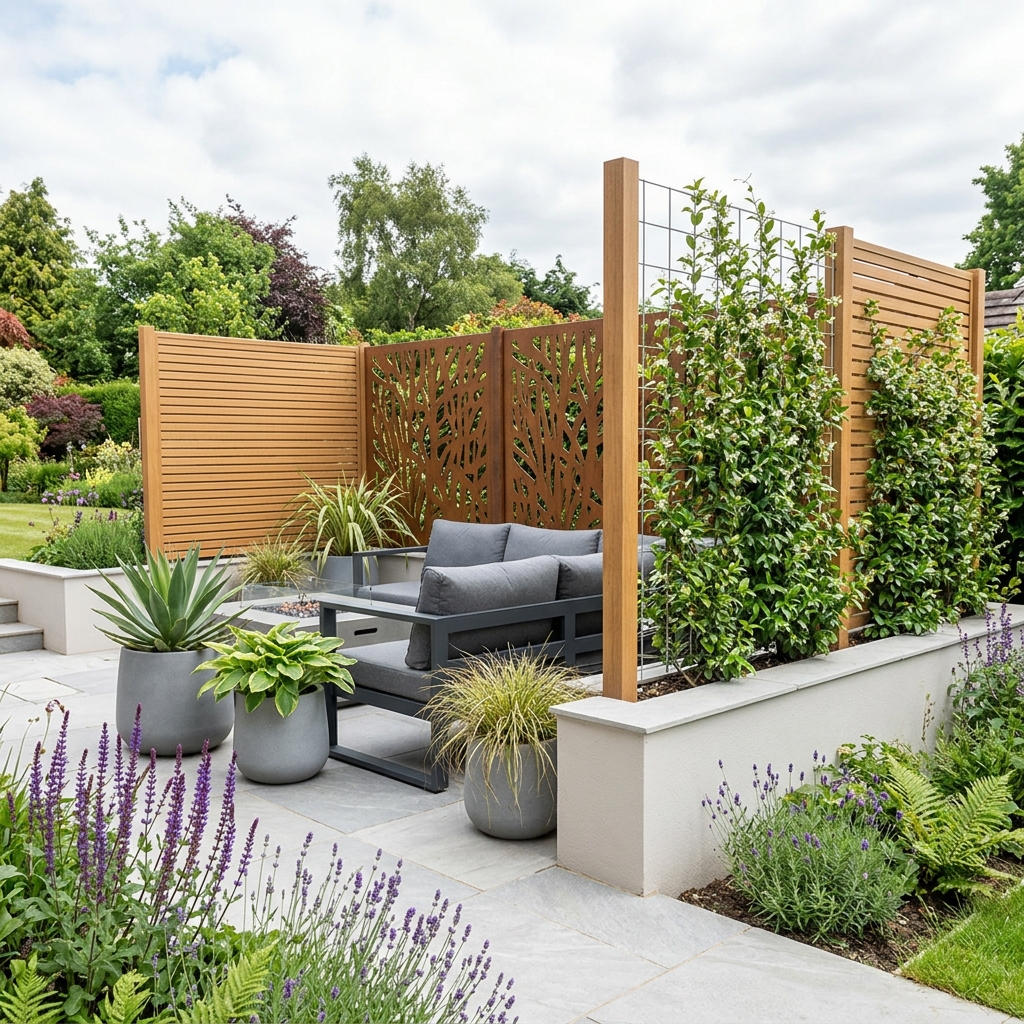
In 2026, we’re seeing a move towards layered screening, combining different materials and heights to create visually interesting and functional spaces. Colour palettes are leaning towards natural tones – greens, browns, and greys – with accents of bolder colours for a contemporary touch. Integrating lighting into screens is also popular, creating a warm and inviting ambiance. Screens are being used to define outdoor living rooms, dining areas, and even outdoor kitchens, effectively extending the living space. Consider incorporating climbing plants to soften the look of hard materials.
Maintaining Your Garden Screen for Longevity
Maintenance varies by material. Wooden screens require regular staining or oiling. Metal screens should be inspected for rust and treated as needed. Composite screens require minimal maintenance – simply cleaning with soap and water. Bamboo and reed screens may need occasional cleaning to prevent mildew. Living screens require pruning and maintenance to maintain their shape and density.
Where to Buy Garden Screens in the UK (2026)
Reputable UK retailers include:
- B&Q: https://www.diy.com/
- Wickes: https://www.wickes.co.uk/
- Forest Garden: https://www.forestgarden.co.uk/
- The Range: https://www.therange.co.uk/
- Online retailers like Wayfair and Amazon also offer a wide selection.
Price comparison websites can help you find the best deals.
Conclusion: Creating Your Perfect Private Garden
Choosing the right garden screen is a crucial step in creating a private and enjoyable outdoor space. By carefully assessing your privacy needs, considering the various materials available, and taking into account your garden’s style and size, you can find the perfect solution. Don’t hesitate to seek professional advice if you’re unsure about installation or planning permission. With a little planning and effort, you can transform your garden into a tranquil retreat you’ll love for years to come.
Comparison Table – Popular Garden Screen Options (2026)
| Material | Approx. Price (per panel/roll) | Durability | Maintenance | Aesthetic |
|---|---|---|---|---|
| Wooden (Forest Garden Eclipse) | £89.99 | Moderate | High (Staining/Treating) | Classic, Natural |
| Wooden (Rowlinson Willow Lap) | £65.0 | Moderate | High (Staining/Treating) | Rustic, Traditional |
| Aluminium (Verandas) | £149.99 | High | Low | Modern, Sleek |
| Composite (EvaQ) | £220.0 | Very High | Very Low | Modern, Wood-look |
| Bamboo | £45.0 | Low-Moderate | Moderate (Cleaning) | Natural, Tropical |
FAQ
1. Do I need planning permission for a garden screen?
Generally, no, if the screen is under 2 metres in height. However, check with your local planning authority, especially if you live in a conservation area or have a listed building.
2. What’s the most low-maintenance garden screen option?
Composite screens are the most low-maintenance, requiring only occasional cleaning with soap and water.
3. How can I protect a wooden garden screen from the weather?
Regularly apply a wood stain or oil to protect the wood from moisture, UV rays, and rot. Choose a product specifically designed for exterior use.
4. How long will a metal garden screen last?
With proper maintenance (powder coating), a metal garden screen can last for 20+ years.
5. Are living screens a good option for privacy?
Yes, but they are a long-term investment. It takes time for hedges and climbing plants to mature and provide substantial privacy.