Table of Contents
As an Amazon Associate, we earn from qualifying purchases. This means we may receive a small commission at no extra cost to you when you buy through links on this page.
What is Composting & Why Do It?
Composting is nature’s recycling process, turning organic waste into a nutrient-rich soil amendment. It’s incredibly beneficial for your garden, the environment, and even your wallet. By composting, you reduce the amount of waste sent to landfill – a significant issue in the UK, with landfill taxes continuing to rise. Landfill sites contribute to greenhouse gas emissions, and composting offers a sustainable alternative. Most importantly, compost improves soil health, adding vital nutrients, improving water retention, and providing a better structure for plant roots. In the UK, while there aren’t currently strict legal requirements for domestic composting, responsible waste management is strongly encouraged, and local councils often promote composting schemes.
Types of Compost Bins: A Comprehensive Overview
Choosing the right compost bin depends on your specific needs. Here’s a breakdown of the most common types available in the UK:
Plastic Compost Bins
These are typically the most affordable and readily available option. They’re lightweight and easy to assemble. However, they can be less durable than other types.
- Pros: Affordable, Lightweight, Easy to Assemble, Good for smaller gardens.
- Cons: Can become brittle in cold weather, Less aesthetically pleasing, May not retain heat as well.
Wooden Compost Bins
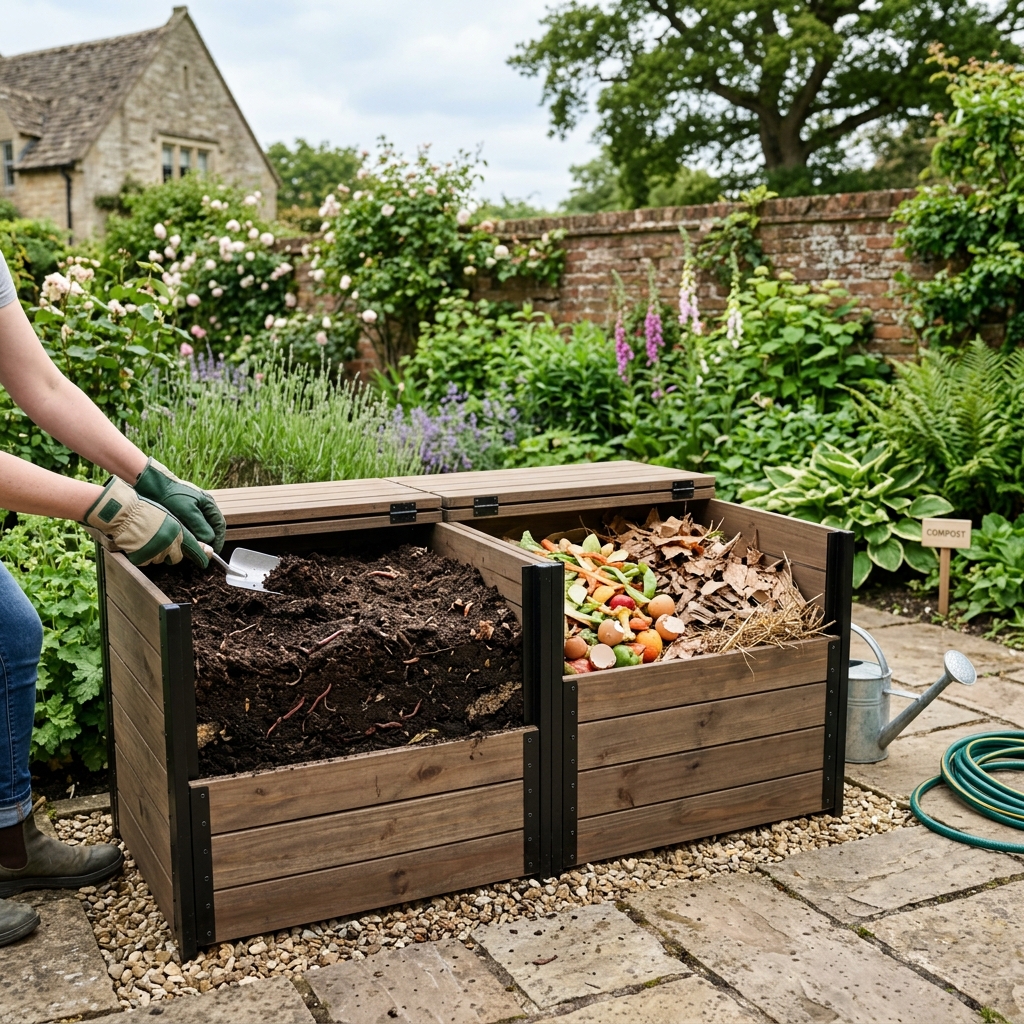
Wooden bins offer a more natural aesthetic and are often larger, allowing for greater capacity. They provide good insulation but require more maintenance to prevent rot.
- Pros: Aesthetically pleasing, Good insulation, Large capacity.
- Cons: Prone to rot if not treated, Can be bulky, More expensive than plastic bins.
Tumbler Compost Bins
Tumblers are enclosed bins that you rotate to aerate the compost. This speeds up the decomposition process and makes turning much easier. They’re often more expensive but are a great option for those who want quick results.
- Pros: Faster composting, Easy to turn, Pest-resistant, Often more compact.
- Cons: More expensive, Can be heavy when full, May require more frequent turning.
Worm Farms (Vermicomposting)
Worm farms use worms (typically red wigglers) to break down food scraps. Ideal for kitchen waste and smaller gardens. They produce nutrient-rich “worm castings” which are excellent for plants.
- Pros: Excellent for kitchen waste, Produces high-quality compost, Suitable for small spaces.
- Cons: Requires more management, Limited to certain types of waste, Not suitable for large amounts of garden waste.
Bokashi Bins
Bokashi composting uses a special bran inoculated with beneficial microbes to ferment food waste. It can handle all types of food waste, including meat and dairy, which are generally avoided in traditional composting. Requires a secondary composting step.
- Pros: Can compost all food waste, Reduces smells, Produces a liquid fertiliser.
- Cons: Requires Bokashi bran, Needs a secondary composting step, Can be messy.
Choosing the Right Compost Bin for Your Needs
Several factors should influence your choice:
- Garden Size: A small garden might only need a 330L bin, while a larger garden could benefit from a 1000L or multiple bins.
- Waste Generated: A family of four producing a lot of kitchen and garden waste will need a larger bin than a single person.
- Budget: Plastic bins are the most affordable, while tumblers and wooden bins are generally more expensive.
- Space Available: Tumblers are more compact, while wooden bins can take up significant space.
- Aesthetic Preferences: Wooden bins look more natural, while plastic bins are more functional.
Bin Capacity Guide:
- 1-2 People: 220-330L
- 3-4 People: 340-640L
- Large Garden/Family: 640L+ or multiple bins
Top Compost Bins Available in the UK (2026)
Here’s a comparison of some of the best compost bins currently available in the UK:
| Product | Capacity | Type | Price (GBP) | Key Features | Where to Buy |
|---|---|---|---|---|---|
| Hotbin Composter (2026 Model) | 330L | Tumbler | £179.99 | Rapid composting, Excellent insulation, Pest-resistant. | Garden Centres, Online Retailers |
| Brabantia 340L Compost Bin | 340L | Plastic | £99.99 | Durable construction, UV resistant, Lockable lid. | John Lewis, Argos, Brabantia Website |
| Lifetime 640L Heavy Duty Compost Bin | 640L | Plastic | £149.99 | Large capacity, Robust construction, Easy to assemble. | B&Q, Wickes, Online Retailers |
| Wormery 3 Tier Worm Farm | N/A (Variable) | Worm Farm | £89.99 | 3-tier system, Includes worms, Ideal for kitchen waste. | Garden Centres, Online Retailers |
| Bokashi Organko 2 Compost Bin | 25L | Bokashi | £69.99 | Compact design, Includes bran, Handles all food waste. | Online Retailers, Specialist Compost Suppliers |
| Gardenature Wooden Compost Bin (1000L) | 1000L | Wooden | £249.99 | Large capacity, Natural aesthetic, Durable construction. | Online Retailers, Garden Centres |
| Dalek Compost Bin (330L) | 330L | Plastic | £79.99 | Classic design, Affordable, Easy to use. | Argos, B&Q, Online Retailers |
Composting 101: How to Get Started
Successful composting relies on balancing “greens” (nitrogen-rich materials) and “browns” (carbon-rich materials). Layer these materials in your bin.
- Layering: Start with a layer of browns (e.g., shredded cardboard, leaves). Add a layer of greens (e.g., grass clippings, vegetable scraps). Repeat this process.
- Moisture: The compost should be as damp as a wrung-out sponge. Add water if it’s too dry.
- Aeration: Turn the compost regularly (every week or two) to provide oxygen.
Composting Dos & Don’ts
Do Compost: Fruit and vegetable scraps, coffee grounds, tea bags, eggshells, grass clippings, leaves, shredded cardboard, paper, wood ash.
Don’t Compost: Meat, dairy, oily foods, diseased plants, pet waste, coal ash, plastic, treated wood.
Tips: Chop materials into smaller pieces to speed up decomposition. Avoid adding large amounts of a single material at once. If it smells, add more browns.
Maintaining Your Compost Bin
Turning the compost regularly is crucial for aeration. Aim to turn it every 1-2 weeks. Monitor the moisture levels, adding water as needed. Finished compost will be dark, crumbly, and earthy-smelling. It typically takes 6-12 months for compost to fully mature, but a tumbler can significantly reduce this time.
Using Your Compost: Giving Back to Your Garden
Finished compost can be used in several ways:
- Soil Amendment: Mix compost into garden beds to improve soil structure and fertility.
- Mulch: Apply a layer of compost around plants to suppress weeds and retain moisture.
- Potting Mix: Combine compost with other ingredients (e.g., peat-free compost, perlite) to create a nutrient-rich potting mix.
Compost is especially beneficial for vegetables, flowers, and trees.
Compost Bin FAQs
Q: How long does it take to make compost?
A: It generally takes 6-12 months for compost to fully mature, but this can vary depending on the type of bin, the materials used, and how often it’s turned. Tumbler composters significantly speed up the process.
Q: What do I do if my compost bin smells?
A: A smelly compost bin usually indicates an imbalance of greens and browns. Add more brown materials (e.g., shredded cardboard, leaves) to absorb excess moisture and odour.
Q: Can I compost meat and dairy?
A: Traditional composting doesn’t recommend composting meat or dairy as it can attract pests and cause unpleasant odours. Bokashi composting is an exception, as it ferments these materials.
Q: What size compost bin do I need?
A: The ideal size depends on your garden size and the amount of waste you generate. See the ‘Choosing the Right Compost Bin’ section for a capacity guide.
Q: How often should I turn my compost bin?
A: Ideally, turn your compost bin every 1-2 weeks to provide aeration. More frequent turning will speed up the composting process.