Table of Contents
Introduction: The Allure of Garden Wood Burning Stoves
The popularity of outdoor wood burning stoves in the UK continues to soar. More and more homeowners are seeking to extend their enjoyment of their gardens into the cooler months, and create a cosy, inviting atmosphere for entertaining. In 2026, we’re seeing a significant trend towards eco-friendly options – stoves designed for higher efficiency and compatibility with sustainable wood fuels. The rustic charm and comforting warmth they provide are increasingly valued, offering a beautiful alternative to gas or electric patio heaters.
Why Choose a Wood Burning Stove for Your Garden?
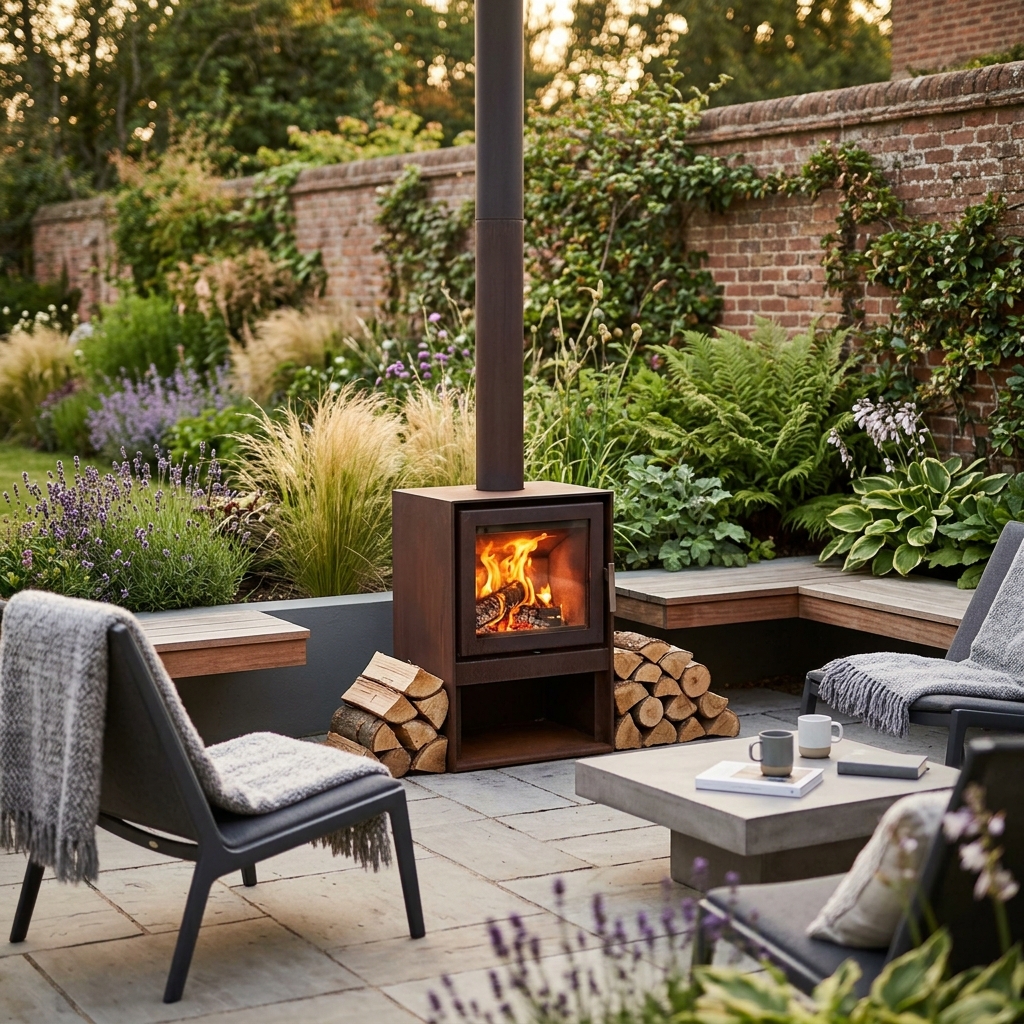
Compared to gas or electric patio heaters, wood burning stoves offer a compelling blend of benefits. They’re often more cost-effective in the long run, particularly if you have access to a sustainable wood supply. A wood burner instantly becomes a focal point in your garden, creating a social hub for gatherings. They extend the use of your garden well into autumn and winter, providing welcome warmth on chilly evenings. And, let’s be honest, there’s something undeniably appealing about the aesthetic of a crackling fire – a primal draw that enhances the overall garden experience.
Types of Wood Burning Stoves for Garden Use
Choosing the right type of wood burning stove depends on your garden’s size, your budget, and your desired aesthetic. Here’s a breakdown of the most common options:
Chiminea
Traditional in style, chimineas are terracotta or cast iron stoves with a rounded shape and a chimney. They radiate heat outwards, making them suitable for smaller gatherings.
| Pros | Cons |
|---|---|
| Relatively inexpensive (starting around £199) | Lower heat output compared to other types |
| Attractive, classic look | Can be fragile; terracotta chimineas can crack in freezing weather |
| Good for creating a cosy ambience | Requires careful positioning to avoid smoke blowing back |
Steel Wood Burners
Modern steel wood burners offer a more contemporary look and often provide higher heat output than chimineas. They’re typically made from robust steel, making them more durable.
| Pros | Cons |
|---|---|
| Durable and long-lasting | Can be more expensive than chimineas |
| High heat output, suitable for larger gardens | Can get very hot to the touch; requires caution |
| Often feature innovative designs | May require more space than a chiminea |
Multi-Fuel Stoves
These versatile stoves can burn both wood and smokeless fuels (important for areas with smoke control regulations – see section below). They offer flexibility and convenience.
| Pros | Cons |
|---|---|
| Can burn a variety of fuels | Often more expensive than wood-only stoves |
| Suitable for use in smoke control areas (with approved fuel) | May require more maintenance due to different fuel types |
| Generally robust and well-built | Can be heavier and less portable |
Fire Pits with Stove Inserts
These combine the open feel of a fire pit with the efficiency of a wood burning stove. The stove insert helps to control the burn and maximise heat output.
| Pros | Cons |
|---|---|
| Offers a combination of ambience and efficiency | Can be more complex to assemble |
| Often includes features like spark arrestors | May require a larger garden area |
| Versatile for both casual and more formal gatherings | Price varies significantly depending on features |
Legal Requirements & Regulations in the UK (2026)
It’s crucial to be aware of the regulations surrounding wood burning stoves in the UK. The primary concern is air quality, and DEFRA (Department for Environment, Food & Rural Affairs) has strict rules, particularly in Smoke Control Areas. As of 2026, these regulations are becoming stricter, with increased enforcement and potential fines for non-compliance.
- Smoke Control Areas: If you live in a Smoke Control Area, you must burn only DEFRA-approved smokeless fuels. Burning wood in a non-approved stove is illegal.
- HETAS Certification: If you’re planning a permanent installation (e.g., connecting a flue to a chimney), the stove must be HETAS (Heating Equipment Testing and Approval Scheme) certified, and the installation must be carried out by a HETAS-registered installer.
- Building Regulations: Permanent installations also need to comply with Building Regulations, particularly regarding flue installation and fire safety.
- Environmental Standards (2026): Expect increased focus on emissions standards. Stoves sold in 2026 will likely need to meet more stringent efficiency and emission requirements.
Safety First: Essential Considerations for Outdoor Wood Burning
- Ventilation: Ensure adequate ventilation to prevent carbon monoxide build-up. Never use a wood burning stove in an enclosed space.
- Distance from Flammable Materials: Keep the stove at least 3 metres away from flammable materials like fences, sheds, and trees.
- Spark Arrestor: Use a stove with a built-in spark arrestor or install one to prevent embers from escaping.
- Carbon Monoxide Detector: Invest in a carbon monoxide detector for your home, especially if the stove is near windows or doors.
- Flue/Chimney Installation: If installing a flue, ensure it’s professionally installed and regularly inspected.
- Safe Wood Storage: Store wood in a dry, well-ventilated area away from the stove.
- Child & Pet Safety: Keep children and pets at a safe distance from the hot stove.
Choosing the Right Size Wood Burning Stove
The appropriate BTU (British Thermal Unit) output depends on the size of your garden and the level of heating you desire. A general guideline is:
- Small Garden (up to 10m²): 5-10kW
- Medium Garden (10-20m²): 10-15kW
- Large Garden (over 20m²): 15kW+
Consider the prevailing weather conditions in your area. If you live in a particularly cold region, you’ll need a higher BTU output. Also, assess your wood fuel consumption – hardwood burns longer and hotter than softwood, impacting how frequently you’ll need to refuel.
Top Wood Burning Stoves for UK Gardens (2026 Reviews)
- Morso Outdoor Living Fire Pit (£399): A stylish and efficient fire pit with a modern design. Excellent heat output for medium-sized gardens. Durable construction.
- Chimineas Outdoor Wood Burner (£199): A classic chiminea offering a traditional aesthetic. Budget-friendly and easy to use. Suitable for smaller gardens.
- Broil King Cast Iron Wood Burning Stove (£450): Robust and versatile, suitable for both wood and smokeless fuels. HETAS approved.
- Gardenlife Outdoor Stove (£280): A contemporary steel wood burner with a sleek design. Offers high heat output and good fuel efficiency.
- Outsunny Steel Chiminea with Cooking Grill (£250): Combines the warmth of a chiminea with the functionality of a cooking grill. Ideal for garden parties.
Wood Fuel Options: What to Burn in Your Garden Stove
The type of wood you burn significantly impacts the stove’s performance and environmental impact.
- Hardwood (Oak, Ash, Beech): Burns longer and hotter than softwood, producing less smoke.
- Softwood (Pine, Spruce, Fir): Burns quickly and produces more smoke. Best used for starting fires.
- Seasoned Wood: Wood must be properly seasoned (dried for at least 6-12 months) to reduce moisture content and improve burning efficiency.
- Wood Pellets/Briquettes: Convenient and efficient options, particularly in smoke control areas.
- Sustainable Sourcing: Choose wood from sustainably managed forests to minimise environmental impact.
- Regulations: Never burn treated wood, painted wood, or any materials that could release harmful toxins.
Maintaining Your Garden Wood Burning Stove
Regular maintenance is essential for safe and efficient operation.
- Cleaning: Remove ashes regularly to maintain airflow.
- Flue Inspection: Have the flue professionally inspected at least once a year.
- General Maintenance: Check for cracks or damage to the stove and repair as needed.
- Recommended Tools: Log grabber tool (£25), wood moisture meter (£30), fireproof gloves (£40).
- Frequency: Inspect the stove before each use. Thoroughly clean and inspect the flue annually.
Frequently Asked Questions (FAQs)
Q: Do I need planning permission for a garden wood burning stove?
Generally, no, for a portable stove. However, a permanent installation (e.g., a flue) might require planning permission, and will certainly need to comply with building regulations.
Q: What is the best wood to burn in my garden stove?
Hardwood like oak, ash, or beech is ideal as it burns longer and produces less smoke. Ensure the wood is well-seasoned.
Q: Can I burn wood in a Smoke Control Area?
Only if you burn DEFRA-approved smokeless fuel or a stove with a HETAS certificate specifically designed for Smoke Control Areas.
Q: How often should I clean my wood burning stove?
Remove ashes before each use. A more thorough cleaning should be done at least once a month, or more frequently if you use the stove often.
Q: What safety precautions should I take when using a garden wood burning stove?
Keep a safe distance from flammable materials, use a spark arrestor, have a carbon monoxide detector, and never leave the stove unattended.