
A beautiful, green lawn is a source of pride for many UK homeowners. But even with the best care, bare patches can appear, marring its appearance. This guide will walk you through identifying the causes, repairing the damage, and preventing future problems, ensuring your lawn remains the envy of the neighbourhood.
As an Amazon Associate, we earn from qualifying purchases. This means we may receive a small commission at no extra cost to you when you buy through links on this page.
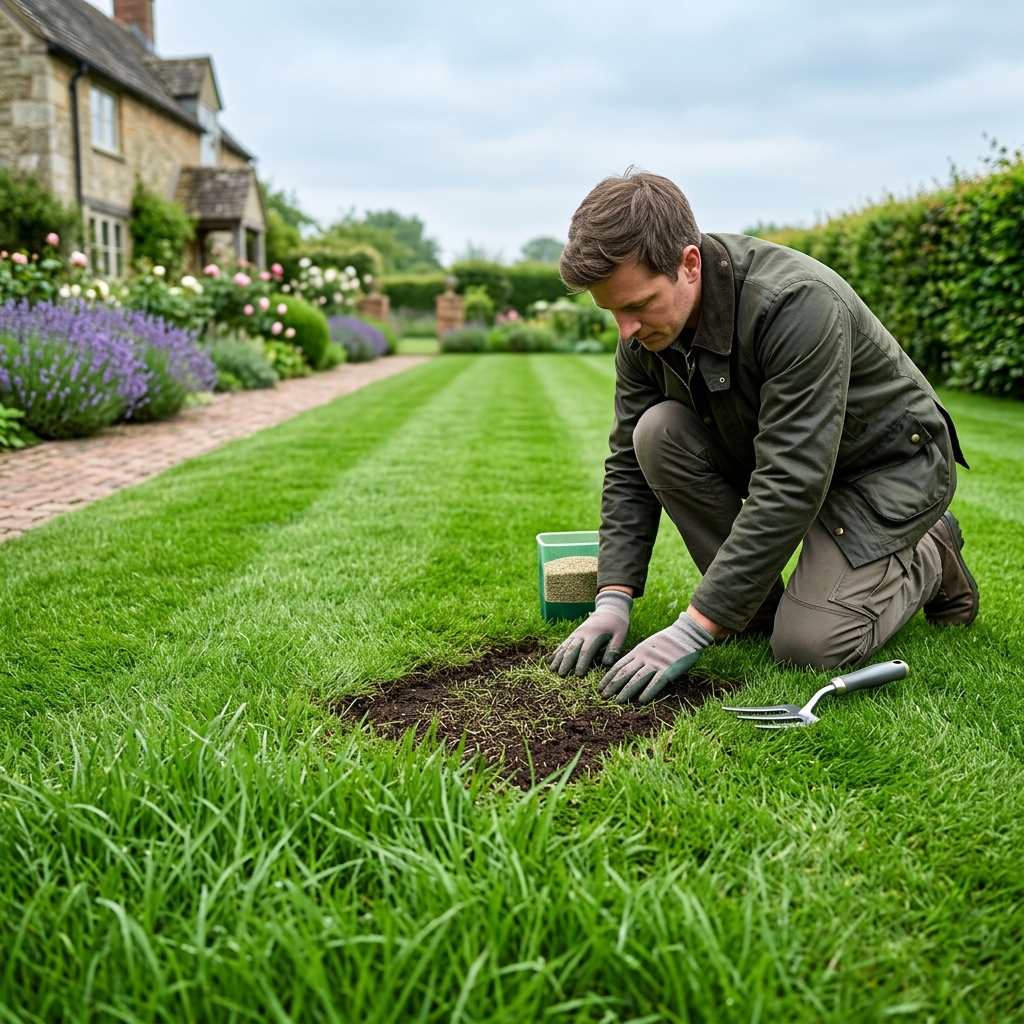
Table of Contents
Understanding Why Your Lawn Has Bare Patches
Bare patches in a UK lawn can arise from a multitude of factors. It’s crucial to identify the root cause before attempting a repair. Here are some common culprits:
- Fungal Diseases: Diseases like Red Thread, Fusarium Patch, and Dollar Spot thrive in damp conditions and can create circular patches of discoloured or dead grass.
- Pest Damage: Leatherjackets (the larvae of crane flies) and chafer grubs feed on grass roots, weakening the turf and leaving it vulnerable. Increasingly common are vine weevil, damaging established lawns.
- Compaction: Heavy foot traffic, especially on clay soils, can compact the soil, reducing air and water penetration, hindering root growth.
- Pet Urine: Dog urine, in particular, contains high levels of nitrogen, which can scorch the grass, creating dead patches.
- Heavy Foot Traffic: Constant walking or playing on the lawn can wear down the grass, leading to bare areas.
- Poor Soil Conditions: Nutrient deficiencies, acidic soil, or poor drainage can all contribute to a weak and unhealthy lawn.
- Seasonal Variations: Harsh winters, prolonged droughts (becoming more frequent in the UK), and excessively wet springs can all stress the lawn and create bare spots.
Diagnosing the Problem: Identifying the Cause of Bare Spots
Before you reach for the lawn seed, detective work is essential. Here’s how to diagnose the issue:
- Visual Inspection: Look closely at the bare patches. Are they circular? Are there any signs of fungal growth (discoloured patches, web-like structures)?
- Check for Pests: Dig around the edges of the bare patch and examine the soil for leatherjackets or chafer grubs. Look for notches taken out of the grass blades, indicating vine weevil.
- Soil Test: A simple soil testing kit (available from garden centres) can determine the pH level and nutrient content of your soil. Ideal pH for lawns is between 6.0 and 7.0.
- Compaction Check: Try pushing a long screwdriver into the soil. If it’s difficult to penetrate, the soil is likely compacted.
- Consider Recent Activity: Have you recently applied any chemicals to the lawn? Has there been a lot of foot traffic? Has a pet been using that area frequently?
Tools & Materials You’ll Need for Lawn Repair
Gathering the right tools and materials will make the job much easier. Here’s a checklist:
- Garden Fork: For loosening compacted soil.
- Rake: For leveling the soil and removing debris.
- Seed Spreader: For even distribution of lawn seed (optional, but recommended for larger areas).
- Lawn Seed: Choose a suitable mix for your region and lawn use (see section below).
- Topsoil: For filling in deeper holes or creating a better seedbed.
- Compost: To improve soil structure and fertility.
- Lawn Feed: For providing essential nutrients (consider seasonal feeds, see section below).
- Fungicide/Insecticide: If a fungal disease or pest infestation is identified (follow product instructions carefully).
- Lawn Roller: For gently firming the soil after seeding (optional).
Step-by-Step Guide to Repairing Bare Patches
Now for the repair work! These steps apply to small to medium-sized bare patches (up to 1 square metre).
- Prepare the Soil: Remove any dead grass or debris. Use a garden fork to loosen the soil to a depth of 5-10cm.
- Amend the Soil: Mix in topsoil and compost to improve the soil structure and fertility. For larger, deeper holes, use a blend of topsoil, compost, and existing soil.
- Rake Level: Rake the area smooth and level, breaking up any large clumps of soil.
- Sow the Seed: Follow the instructions on the lawn seed packet for sowing rate. Use a seed spreader for even distribution, or sow by hand, ensuring good coverage.
- Lightly Rake In: Gently rake the seed into the soil to ensure good contact.
- Firm the Soil: Gently firm the soil with a lawn roller or by walking over it.
- Water Gently: Water the area gently with a fine spray to avoid washing away the seed.
- Protect the Area: Protect the newly seeded area from foot traffic and pets with netting or fencing.
For Larger Areas: If you have a large area to repair, consider using a soil blend specifically formulated for lawn repair. This will provide a better seedbed and promote faster germination.
Choosing the Right Lawn Seed for the UK Climate
Selecting the right lawn seed is crucial for success. Here’s a breakdown of common seed mixes:
Comparison Table: Lawn Seed Mixes
| Seed Type | Pros | Cons | Best For | Estimated Price (per kg – 2026) |
|---|---|---|---|---|
| Ryegrass | Fast germination, hard-wearing, good for high-traffic areas. | Can be prone to fungal diseases, requires more frequent mowing. | Family lawns, sports pitches, high-traffic areas. | £8.99 |
| Fescue | Drought-tolerant, low maintenance, good shade tolerance. | Slower germination, less hard-wearing than ryegrass. | Shady areas, low-maintenance lawns, drought-prone regions. | £10.99 |
| Wildflower Mix | Attracts pollinators, low maintenance, adds biodiversity. | Not ideal for heavy foot traffic, requires less frequent mowing. | Wildlife gardens, naturalistic lawns. | £12.99 |
| Baron Mix (Ryegrass & Fescue) | Good balance of wear resistance and drought tolerance. | May require some maintenance. | General purpose lawns, family gardens. | £9.99 |
Drought Resistance: With increasingly frequent summer droughts predicted, consider seed mixes containing drought-tolerant fescues.
Feeding and Watering Your Newly Repaired Lawn
Proper feeding and watering are essential for germination and healthy growth.
- Watering: Keep the soil consistently moist (but not waterlogged) until the seeds have germinated and the new grass is established.
- Feeding: Avoid feeding the newly seeded area until the grass has been mown at least twice. Then, apply a balanced lawn feed like Miracle-Gro EverGreen Complete 4-in-1 Lawn Food (£14.99).
- Organic vs. Synthetic: Organic feeds release nutrients slowly, promoting long-term health. Synthetic feeds provide a quick boost, but can be harsh on the environment.
- Seasonal Feeding: Apply Westland SafeLawn Autumn Lawn Feed (£12.5) in autumn to strengthen the grass roots for winter.
Preventing Future Bare Patches: Long-Term Lawn Care
Prevention is better than cure! Here’s how to maintain a healthy lawn and prevent future bare patches:
- Regular Mowing: Mow your lawn regularly, but avoid cutting it too short.
- Aeration: Aerating the lawn (creating small holes in the soil) improves air and water penetration.
- Scarification: Scarifying (removing thatch – a layer of dead grass) improves drainage and allows air to reach the roots.
- Pest Control: Monitor for signs of pests and take action promptly if necessary.
- Feeding Schedule: Follow a regular feeding schedule, adjusting to the needs of your lawn.
- Avoid Compaction: Limit foot traffic on the lawn, especially when it’s wet.
Dealing with Persistent Problems: When to Call a Professional
Sometimes, despite your best efforts, lawn problems persist. Here are some signs it’s time to call a professional:
- Severe Pest Infestation: If you’re unable to control a pest infestation on your own.
- Persistent Fungal Disease: If fungal diseases keep returning despite treatment.
- Severe Soil Compaction: If the soil is heavily compacted and difficult to improve.
- Drainage Issues: If the lawn is constantly waterlogged.
- Extensive Bare Patches: If large areas of the lawn are bare and require complete renovation.
A professional lawn care specialist can diagnose the problem accurately and recommend the best course of action.
FAQ
Q: How long does it take for lawn seed to germinate?
Typically, lawn seed takes 7-14 days to germinate, depending on the seed type, weather conditions, and soil moisture.
Q: What’s the best time of year to repair a lawn in the UK?
Spring (March-May) and autumn (September-October) are the best times to repair a lawn, as the soil is warm and moist, and the temperatures are moderate.
Q: How can I protect my newly seeded lawn from birds?
Use netting or bird scarers to deter birds from eating the seed.
Q: My lawn is shady. What type of seed should I use?
Fescue grass mixes are generally the most shade-tolerant. Look for a mix specifically formulated for shady areas.
Q: Is it necessary to use a lawn roller after seeding?
No, it’s not essential, but a lawn roller can help to firm the soil and ensure good seed-to-soil contact, leading to better germination rates.