
Table of Contents
As an Amazon Associate, we earn from qualifying purchases. This means we may receive a small commission at no extra cost to you when you buy through links on this page.
Introduction: Why Spring Fertilising is Crucial for a Healthy Lawn
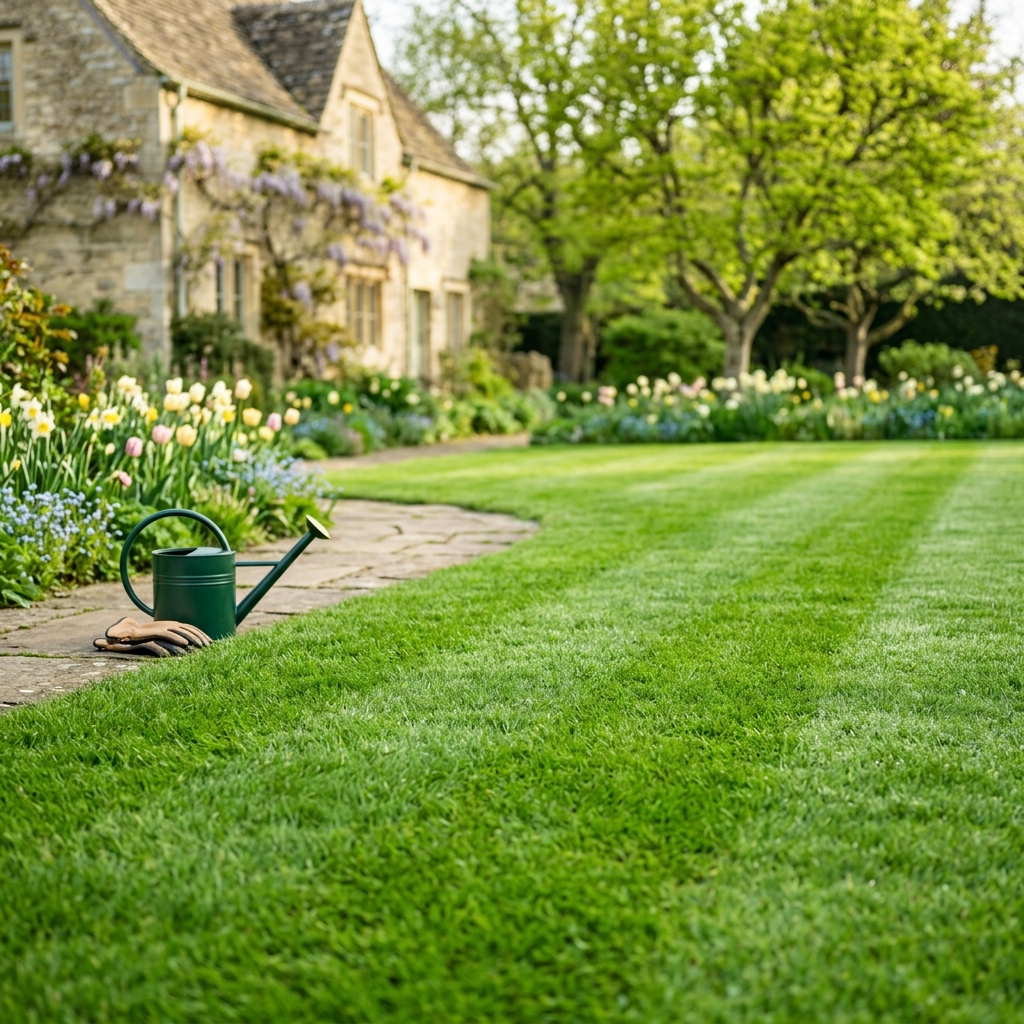
Spring is arguably the *most* important time to fertilise your UK lawn. After the stresses of winter – frost, snow, foot traffic, and generally harsh weather – your grass needs a boost to recover and thrive. A spring feed does more than just green up your lawn; it promotes strong root growth, encourages lush foliage, and prepares your grass for the demands of summer. The UK climate, with its wet winters and variable springs, means lawns can suffer significant nutrient depletion. Replenishing these nutrients now is vital for a vibrant, healthy lawn throughout the growing season.
Understanding Lawn Fertiliser NPK Ratios
Lawn fertilisers are labelled with an NPK ratio – Nitrogen (N), Phosphorus (P), and Potassium (K). Understanding what each element does is key to choosing the right fertiliser:
- Nitrogen (N): Promotes leaf growth and gives your lawn that rich green colour. Essential for recovery in spring.
- Phosphorus (P): Encourages root development. Important for establishing new lawns or repairing damaged areas.
- Potassium (K): Enhances overall plant health, improves disease resistance, and helps the lawn withstand stress (like drought or heavy use).
For a spring application in the UK, an NPK ratio slightly higher in Nitrogen is generally recommended – something like 20-5-10 or 24-4-8. This prioritises top growth after the dormancy of winter. Considering UK soil types, many benefit from a little extra Potassium to improve resilience against fungal diseases common in our damp climate. Clay soils may benefit from a slightly higher Phosphorus content to aid root penetration.
Types of Lawn Fertilisers Available in the UK
Choosing the right type of fertiliser depends on your lawn’s needs, your budget, and your preference for organic or synthetic products. Here’s a breakdown:
- Granular Fertilisers: The most common type, applied with a spreader. Provide a slow and steady release of nutrients. Generally more cost-effective.
- Liquid Fertilisers: Fast-acting, applied with a watering can or sprayer. Ideal for a quick boost, but require more frequent application.
- Slow-Release Fertilisers: Coated granules that release nutrients over a longer period (typically 6-8 weeks). Reduce the risk of scorching and provide consistent feeding.
- Organic Fertilisers: Derived from natural sources like compost, manure, or bone meal. Improve soil health and provide a more sustainable feeding solution.
- Synthetic Fertilisers: Man-made, offering precise nutrient control and fast results. Can be more potent and require careful application.
For spring, slow-release granular or quick-release liquid fertilisers are popular choices. Organic options are excellent for long-term soil health but may not provide the immediate ‘green-up’ of synthetic options.
Top 5 Granular Lawn Fertilisers for Spring 2026 (UK)
Here’s a comparison of five top-performing granular lawn fertilisers available in the UK:
| Product | NPK Ratio | Coverage (approx.) | Price (2026) | Pros | Cons |
|---|---|---|---|---|---|
| Miracle-Gro Spring & Summer Lawn Food (1.5kg) | 20-5-10 | 30-50m² | £12.99 | Easy to use, noticeable green-up, widely available. | Shorter lasting effect compared to slow-release options. |
| Evergreen Complete 4-in-1 Lawn Food (3kg) | 18-3-18 + Iron | 200m² | £19.99 | Includes weed killer, moss killer and hardener. Good value. | Can be harsh on delicate lawns, not suitable for newly seeded areas. |
| Westland SafeLawn Autumn & Spring Lawn Feed (5kg) | 6-9-6 | 250m² | £24.99 | Pet and child friendly, slow-release formula, promotes strong roots. | Lower nitrogen content might not provide the quickest green-up. |
| Nutrigreen Spring Lawn Care Programme (2.5kg) | 22-5-8 | 125m² | £29.99 | Contains added micronutrients, promotes disease resistance. | More expensive than other options. |
Top 3 Liquid Lawn Fertilisers for a Quick Boost (UK)
| Product | NPK Ratio | Price (2026) | Pros | Cons |
|---|---|---|---|---|
| Vitax Solubule Liquid Lawn Feed (1L) | 24-8-16 | £9.99 | Very fast-acting, easy to apply, ideal for a quick colour boost. | Requires frequent applications, can be prone to scorching if overapplied. |
Organic Lawn Feed Options for an Eco-Friendly Spring
For gardeners prioritising soil health and sustainability, organic lawn feeds are an excellent choice.
- Compost: A fantastic all-rounder. Apply a thin layer (approx. 1cm) and rake it in.
- Manure: Well-rotted manure provides valuable nutrients. Ensure it’s fully composted to avoid burning the grass.
- Doff Organic Lawn Boost (1kg): £15.49 – A specialist organic fertiliser containing seaweed and other natural ingredients. Provides a gentle, sustained feed.
Organic feeds improve soil structure, encourage beneficial microbes, and contribute to a healthier ecosystem in your garden.
How to Apply Lawn Fertiliser Correctly: A Step-by-Step Guide
- Measure your lawn: Calculate the area to determine how much fertiliser you need.
- Calibrate your spreader: Follow the manufacturer’s instructions to ensure even application.
- Apply evenly: Walk at a consistent pace, overlapping slightly with each pass.
- Avoid scorching: Don’t apply fertiliser to dry lawns.
- Water thoroughly: After application, water the lawn to help the fertiliser dissolve and reach the roots. (unless using a slow release formula – check the instructions).
Troubleshooting Common Fertilising Problems
- Uneven growth: Caused by uneven application. Re-apply to the sparse areas.
- Burnt patches: Over-fertilisation or application to dry lawns. Water thoroughly and avoid further application in that area.
- Weed encouragement: High nitrogen levels can promote weed growth. Consider a fertiliser with a weed killer or apply a separate weed control product.
- Over-fertilisation: Leads to excessive growth and potential disease. Reduce the application rate next time.
Lawn Fertiliser FAQs for UK Gardeners (2026)
Q: When is the best time to fertilise my lawn in spring?
Generally, between March and April is ideal, once the ground has warmed up and the grass is actively growing. Avoid fertilising during a frost.
Q: Can I use autumn lawn feed in spring?
While some fertilisers are labelled for both seasons, spring feeds typically have a higher nitrogen content for promoting growth. Autumn feeds are formulated for strengthening roots before winter.
Q: Is lawn fertiliser safe for pets and children?
Always check the product label. ‘SafeLawn’ and organic options are generally considered safer. Keep pets and children off the lawn until the fertiliser has been watered in and dried.
Q: What type of fertiliser is best for a newly seeded lawn?
Use a starter fertiliser high in phosphorus (P) to encourage root development. Avoid high-nitrogen fertilisers until the grass is established.
Q: How often should I fertilise my lawn?
Typically, two applications per year – one in spring and one in autumn – are sufficient. Slow-release fertilisers may only require a single application.
Conclusion: Choosing the Right Fertiliser for Your Spring Lawn
The best lawn fertiliser for you depends on your specific needs. For a quick and easy green-up, a liquid fertiliser like Vitax Solubule is a great choice. If you’re looking for a longer-lasting solution, a slow-release granular fertiliser such as Westland SafeLawn is ideal. For the eco-conscious gardener, organic options like Doff Organic Lawn Boost offer a sustainable and soil-enhancing approach. Remember to consider your lawn type, soil conditions, and budget when making your decision, and always follow the manufacturer’s instructions for best results. A little effort in spring will reward you with a lush, healthy lawn throughout the summer months.