
Table of Contents
As an Amazon Associate, we earn from qualifying purchases. This means we may receive a small commission at no extra cost to you when you buy through links on this page.
What is Lawn Aeration and Why is it Important?
Lawn aeration is the process of creating small holes in the soil to allow air, water, and nutrients to penetrate the grass roots. Over time, UK lawns, especially those with heavy foot traffic or composed of clay-rich soil (very common across much of the country), become compacted. This compaction restricts root growth, hinders water absorption, and prevents essential nutrients from reaching the grass, leading to a thin, unhealthy lawn. Understanding your soil type is crucial. Sandy soils naturally aerate better, but even these benefit from occasional aeration. Loam soils are ideal, but still compact over time. Clay soils are notorious for compaction and require more frequent attention.
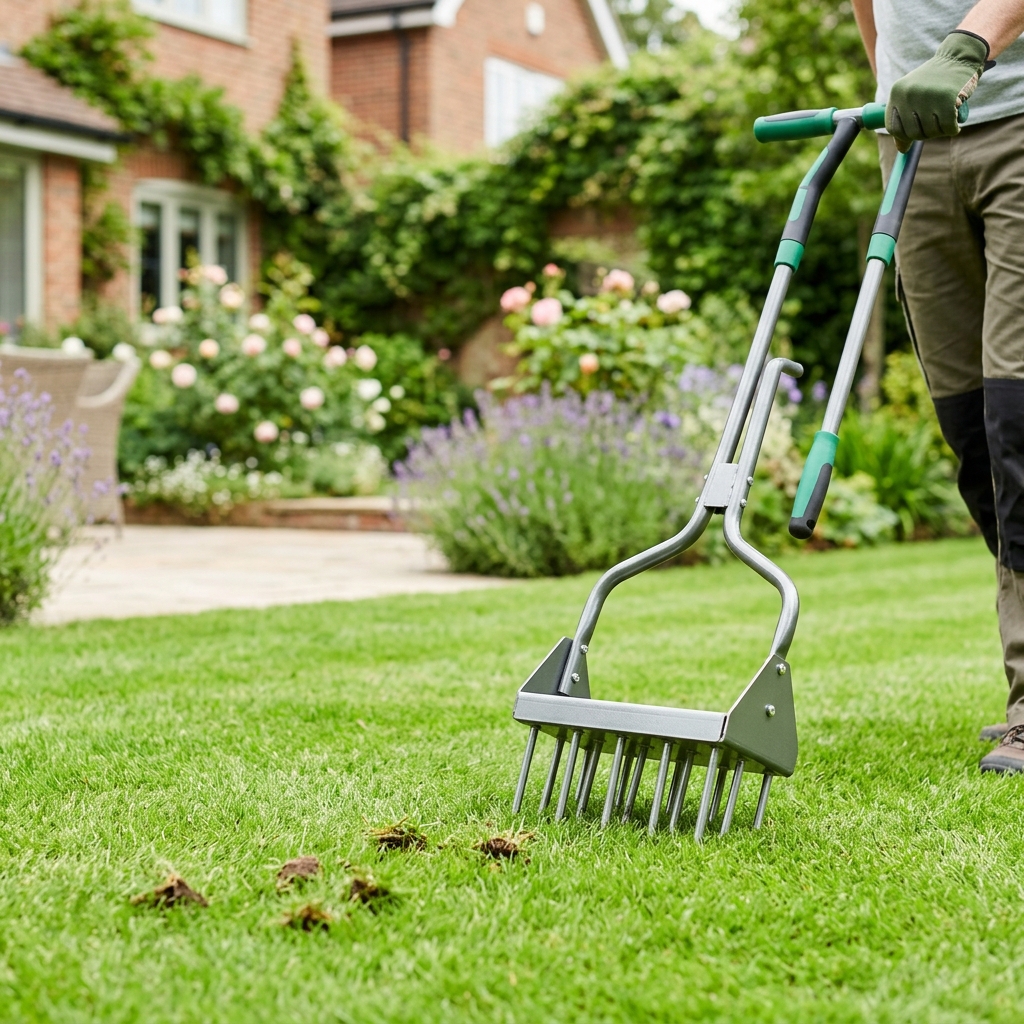
Regular aeration offers numerous benefits:
- Improved Drainage: Reduces waterlogging, preventing fungal diseases.
- Better Nutrient Absorption: Allows fertilisers and feeds to reach the roots effectively.
- Reduced Compaction: Breaks up hard soil, improving air circulation.
- Stronger Root Growth: Encourages deeper, healthier root systems.
- Thicker, Greener Lawn: Results in a more vibrant and resilient lawn.
Types of Manual Lawn Aerators
Several types of manual lawn aerators are available in the UK, each with its own strengths and weaknesses:
Spike Aerators
These aerators feature a series of spikes that simply push into the soil, creating holes. They’re generally the most affordable option.
- Pros: Inexpensive, easy to use, lightweight.
- Cons: Can further compact the soil *around* the hole, less effective on very hard ground, doesn’t remove soil cores.
Core Aerators (Manual Versions)
These remove small plugs or cores of soil from the lawn, creating more substantial aeration. Manual core aerators require more effort than spike aerators.
- Pros: More effective aeration, improves drainage and soil structure.
- Cons: Requires significant physical effort, can be slow, leaves holes on the lawn (cores can be brushed in).
Rolling Aerators
These consist of a weighted roller covered in spikes. They are rolled across the lawn, creating aeration with each pass.
- Pros: Relatively easy to use, covers larger areas quickly, good for light compaction.
- Cons: Less effective on heavily compacted soil, can be heavy to manoeuvre.
Garden Fork Aeration
A traditional method using a sturdy garden fork to manually create holes in the lawn. This is a very low-cost option.
- Pros: Very inexpensive (if you already own a fork), good for small areas, can target specific compacted spots.
- Cons: Extremely physically demanding, very slow, less uniform aeration.
Choosing the Right Manual Lawn Aerator for Your UK Garden
The best manual lawn aerator for you depends on several factors:
- Lawn Size: For small lawns (under 50 square metres), a garden fork or a basic spike aerator might suffice. Larger lawns require a more efficient tool like a rolling aerator or manual core aerator.
- Soil Type: Heavy clay soils benefit most from core aeration. Sandy or loamy soils can be effectively aerated with a spike or rolling aerator.
- Budget: Prices range from around £22.50 for a garden fork to £44.99 for a decent spike aerator, up to £179.00 for a cordless (but still relatively small-scale) powered option.
- Physical Effort: Consider your fitness level. Core aeration requires significant strength and stamina.
- Frequency of Use: If you plan to aerate frequently (twice a year), investing in a durable and comfortable aerator is worthwhile.
Garden Size Guide:
- Small (under 50m²): Garden Fork or Spike Aerator
- Medium (50-150m²): Rolling Aerator or Spike Aerator
- Large (over 150m²): Manual Core Aerator (expect significant effort) or consider a powered option.
Top 5 Manual Lawn Aerators UK – 2026 Reviews
Here’s a rundown of some of the best manual lawn aerators available in the UK in 2026:
1. Spear & Jackson 46cm Manual Lawn Aerator – £39.99
A robust spike aerator with a comfortable handle. Good for medium-sized lawns with moderately compacted soil. Well-regarded for its build quality.
2. Gardena 8182-20 Lawn Aerator – £44.99
A high-quality spike aerator known for its durability and ease of use. Gardena is a reputable brand, and this model offers good value for money.
3. Wilko Heavy Duty Garden Fork (for aeration) – £22.50
A budget-friendly option for small lawns or spot aeration. A solid, reliable fork that can be used for multiple gardening tasks.
4. Fiskars Solid Point Garden Fork – £35.00
A lighter-weight garden fork with a comfortable handle. Excellent for those who find heavier forks difficult to use. Fiskars is known for ergonomic design.
5. Bosch 14.4V Cordless Lawn Aerator (battery & charger separate) – £179.00
While technically cordless, this is often used for smaller areas where manual effort is undesirable. Offers a good balance of convenience and affordability, but requires separate purchase of battery and charger.
How to Use a Manual Lawn Aerator – A Step-by-Step Guide
- Preparation: Mow the lawn to a normal height. Water the lawn thoroughly a day or two before aeration – moist soil is easier to penetrate.
- Aeration Technique: For spike/core aerators, work in overlapping rows, pushing the aerator into the soil with firm, even pressure. For garden fork aeration, insert the fork into the soil at a 45-degree angle and rock it back and forth to create holes.
- Coverage: Aim to aerate the entire lawn, focusing on heavily trafficked areas.
- Post-Aeration Care: Brush away any cores removed by a core aerator. Apply a lawn feed (autumn or spring fertiliser) to help the grass recover. Water the lawn well after aeration and feeding. Overseeding can be done at the same time to thicken the lawn.
Manual Lawn Aeration vs. Powered Aerators: Which is Best?
| Feature | Manual Aerator | Powered Aerator |
|—|—|—|
| Cost | £22.50 – £179.00 | £150 – £500+ |
| Effort | High | Low |
| Lawn Size | Best for small to medium lawns | Best for medium to large lawns |
| Soil Type | Effective for most soils (core aerators best for clay) | Effective for all soils, especially heavy clay |
| Noise | Silent | Noisy |
| Maintenance | Minimal | More complex (engine/motor) |
Manual aerators are ideal for smaller lawns, budget-conscious gardeners, and those who prefer a quieter, eco-friendly approach. Powered aerators are more efficient for larger lawns and heavily compacted soil but come with a higher price tag and require more maintenance.
Lawn Aeration Schedule for the UK Climate
In the UK, the best time to aerate your lawn is during periods of active growth:
- Spring (March-April): Ideal for preparing the lawn for the growing season.
- Autumn (September-October): Helps the lawn recover from summer stress and prepares it for winter.
Avoid aerating during periods of drought or frost. After heavy rainfall, allow the soil to dry slightly before aerating.
Maintaining Your Lawn Aerator
To prolong the life of your manual lawn aerator:
- Cleaning: Remove soil and debris after each use.
- Storage: Store in a dry place, protected from the elements.
- Rust Prevention: Apply a light coating of oil to metal parts to prevent rust, especially important in the damp UK climate.
- Fork Maintenance: Sharpen garden fork tines periodically to maintain their effectiveness.
Frequently Asked Questions (FAQs) about Manual Lawn Aerators
Q: How often should I aerate my lawn?
A: Generally, once or twice a year is sufficient. Clay soils may require more frequent aeration.
Q: Can I aerate a wet lawn?
A: No, avoid aerating a soggy lawn as it can cause further compaction. Wait for the soil to dry slightly.
Q: What should I do with the soil cores after core aeration?
A: Brush the cores back into the lawn. They will break down and return nutrients to the soil.
Q: Will aeration damage my lawn?
A: Aeration may initially leave small holes, but these will quickly disappear as the lawn recovers. The long-term benefits far outweigh any temporary disruption.
Q: Is aeration necessary for all lawn types?
A: While all lawns benefit from aeration, the frequency depends on the grass type and soil conditions. Warm-season grasses typically require less aeration than cool-season grasses.