
Table of Contents
As an Amazon Associate, we earn from qualifying purchases. This means we may receive a small commission at no extra cost to you when you buy through links on this page.
Understanding Shade and Grass Growth
A beautiful, green lawn is a hallmark of a well-maintained garden. However, achieving this under the shade of trees, buildings, or fences presents a unique challenge. Many standard lawn seed mixes simply won’t thrive in areas receiving less than six hours of direct sunlight daily. This is because grass, like all plants, relies on photosynthesis for energy, and reduced sunlight limits this process.
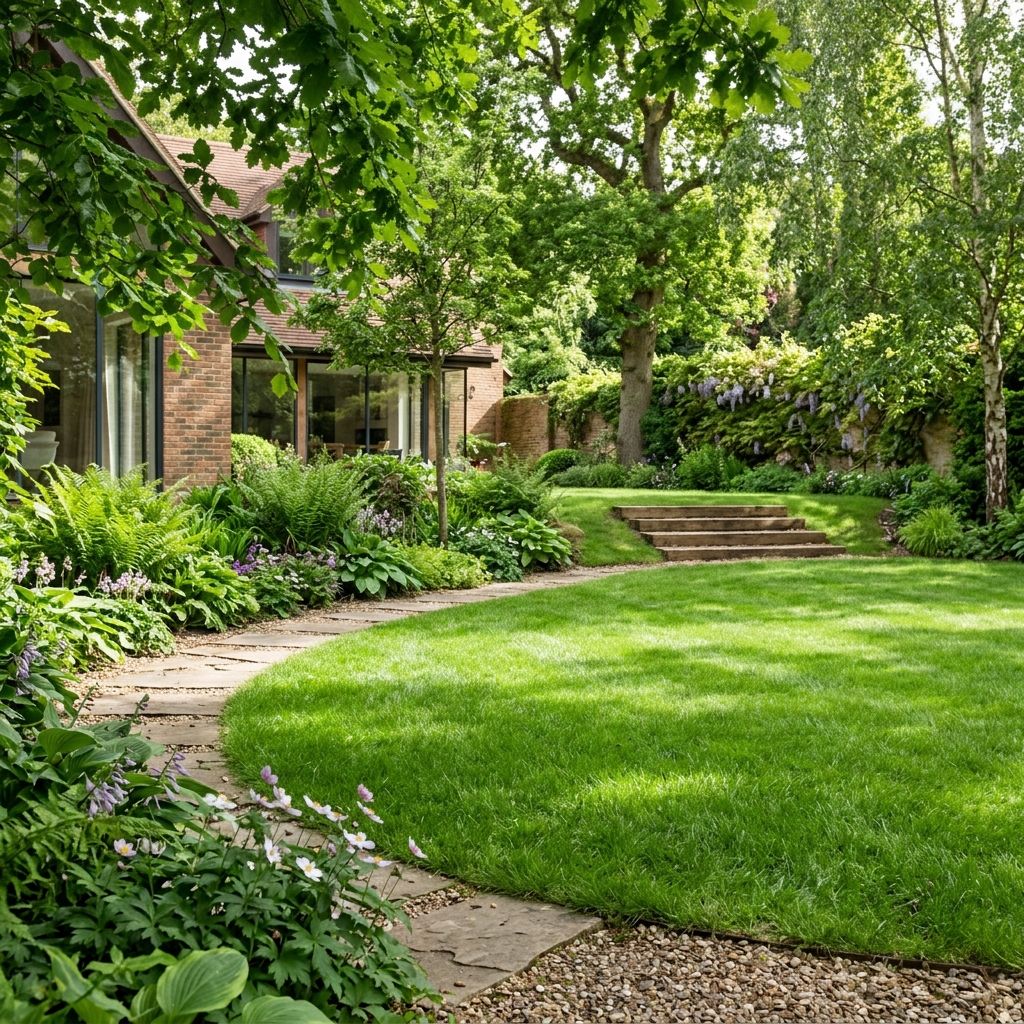
There are three primary types of shade to consider:
- Light Shade: Receives 4-6 hours of direct sunlight, or dappled sunlight throughout the day. Often found under high-branching trees.
- Partial Shade: Receives 2-4 hours of direct sunlight, primarily in the morning or late afternoon.
- Dense Shade: Receives less than 2 hours of direct sunlight, or very little light during the growing season. Commonly found under dense tree canopies or against north-facing walls.
Standard lawn seed mixes, typically containing a high proportion of perennial ryegrass, require a significant amount of sunlight. In shady conditions, ryegrass struggles, leading to thin, patchy growth and increased susceptibility to weeds and moss.
Key Grass Types for Shade Tolerance
Fortunately, certain grass species are naturally more tolerant of shady conditions. These include:
Red Fescue (Festuca rubra)
Red fescue is renowned for its shade tolerance and fine leaf texture. It forms a dense, attractive lawn that’s relatively slow-growing, reducing the need for frequent mowing. It prefers slightly acidic soils. It can struggle with heavy foot traffic.
Strong Creeping Red Fescue (Festuca rubra commutata)
A more robust version of red fescue, strong creeping red fescue spreads via rhizomes (underground stems), allowing it to self-repair and fill in bare patches. It’s exceptionally shade-tolerant and can handle moderate foot traffic. It’s slower to establish than some other grasses.
Smooth Meadow Grass (Poa pratensis)
While not as shade-tolerant as fescues, smooth meadow grass can contribute to a shade-tolerant mix, particularly in areas receiving some direct sunlight. It’s quick to germinate and establish, providing reasonably good wear tolerance, but requires more moisture.
Hard Fescue (Festuca brevipila)
Hard fescue is exceptionally drought-tolerant and can survive in poor soils. It’s also surprisingly shade-tolerant, but has a coarser leaf texture than red fescue. It’s often used in low-maintenance lawns.
Top 5 Best Lawn Seed Mixes for Shade (UK 2026)
Here’s a breakdown of five leading lawn seed mixes specifically formulated for shady conditions, available in the UK in 2026:
Comparison Table
| Product Name | Price (GBP) | Seed Composition | Coverage (m²) | Shade Level Suitability | Pros | Cons |
|---|---|---|---|---|---|---|
| Miracle-Gro EverGreen Shade Grass Seed 1kg | 12.99 | Red Fescue, Strong Creeping Red Fescue | 35 | Light to Partial Shade | Good germination rate, easy to apply, well-known brand. | May require more frequent feeding. Not ideal for dense shade. |
| Westland Shady 2-in-1 Lawn Seed & Feed 1kg | 15.49 | Red Fescue, Smooth Meadow Grass, Hard Fescue | 30 | Partial to Dense Shade | Includes slow-release feed, provides good colour, versatile. | Feed may not be suitable for all soil types. |
| DLF Seeds Proline Shade & Repair 1kg | 18.75 | Strong Creeping Red Fescue, Red Fescue, Smooth Meadow Grass | 30-40 | Partial to Dense Shade | Excellent self-repairing capabilities, very shade-tolerant. | Higher price point. |
| Scotts Lawn Builder Shady 1kg | 9.99 | Red Fescue, Hard Fescue | 35 | Light to Partial Shade | Affordable, easy to find, good for filling in gaps. | Limited shade tolerance compared to other mixes. |
| B&Q Crocus Shade Lawn Seed 1kg | 8.5 | Red Fescue, Smooth Meadow Grass | 25 | Partial Shade | Budget-friendly, widely available. | Coverage is lower than other options, limited suitability for dense shade. |
Our Top Pick: DLF Seeds Proline Shade & Repair 1kg. While it’s the most expensive option, the exceptional shade tolerance and self-repairing qualities make it a worthwhile investment for challenging shady areas.
Preparing the Ground for Shade-Tolerant Lawn Seed
Proper ground preparation is crucial for success. Here’s a step-by-step guide:
- Clear Debris: Remove leaves, twigs, stones, and any other debris from the area.
- Improve Drainage: Shady areas often retain more moisture. Improve drainage by adding organic matter (compost or well-rotted manure) to the soil.
- Soil Testing: Test your soil pH. Most grasses prefer a pH between 6.0 and 7.0.
- Amend Soil: Based on the soil test results, amend the soil accordingly. Add lime to raise the pH, or sulphur to lower it. Incorporate plenty of organic matter.
- Aeration: Aerating the soil is vital. Use a garden fork or a hollow-tine aerator to create small holes, improving air circulation and drainage. Compacted soil inhibits root growth.
- Rake Level: Rake the area level, creating a fine tilth (crumbly soil structure).
Sowing Lawn Seed in Shade: A Practical Guide
Timing is key. The best time to sow shade-tolerant lawn seed is in the spring (March-April) or autumn (September-October). Avoid sowing during periods of extreme heat or frost.
- Seed Rate: Follow the manufacturer’s instructions on the seed packet. Generally, a seed rate of around 25-35 grams per square metre is recommended.
- Sowing Method: You can either broadcast the seed by hand (spreading it evenly) or use a seed spreader for more precise application.
- Lightly Rake In: Lightly rake the seed into the top 1cm of soil.
- Firm Gently: Gently firm the soil with a roller or by walking over it.
- Water Gently: Water gently with a fine spray to avoid washing away the seeds.
- Keep Moist: Keep the soil consistently moist, but not waterlogged, until the seeds germinate.
Germination can be slower in shady conditions. Be patient and ensure the soil remains moist.
Caring for a Shady Lawn: Maintenance Tips
Maintaining a shady lawn requires a slightly different approach:
- Watering: Water deeply but infrequently, especially during dry spells.
- Feeding: Use a shade-specific lawn feed. These feeds typically have a lower nitrogen content, as excessive nitrogen can promote leaf growth at the expense of root development. Apply in spring and autumn.
- Mowing: Mow at a slightly higher cutting height (around 5-7cm) to allow the grass to capture more sunlight. Mow less frequently.
- Leaf Removal: Remove fallen leaves promptly, as they block sunlight and can create a breeding ground for diseases.
Troubleshooting Common Problems with Shady Lawns
Shady lawns are prone to certain problems:
- Moss Growth: Moss thrives in damp, shady conditions. Improve drainage, aerate the soil, and use a moss killer if necessary.
- Bare Patches: Overseed bare patches with shade-tolerant lawn seed.
- Slow Growth: Ensure the soil is healthy and well-drained. Consider applying a shade-specific lawn feed.
- Disease: Shady lawns can be susceptible to fungal diseases. Improve air circulation by pruning trees and shrubs, and avoid overwatering.
FAQ: Lawn Seed for Shade in the UK
Q: When is the best time to sow lawn seed in the shade?
The best time is spring (March-April) or autumn (September-October). Avoid sowing during very hot or cold weather.
Q: Will any lawn seed grow in dense shade?
Very few grasses will thrive in dense shade. Strong Creeping Red Fescue is your best bet, but even it will struggle. Consider alternative ground cover options for areas with extremely limited sunlight.
Q: How often should I feed a shady lawn?
Feed twice a year – in spring and autumn – with a shade-specific lawn feed.
Q: What can I do about moss in my shady lawn?
Improve drainage, aerate the soil, and consider using a moss killer. Addressing the underlying cause (dampness and shade) is crucial.
Q: Is it worth overseeding a shady lawn?
Absolutely! Overseeding with a shade-tolerant mix can help fill in bare patches and improve the overall health and density of your lawn.